


What is Unshaven Hair Transplantation?
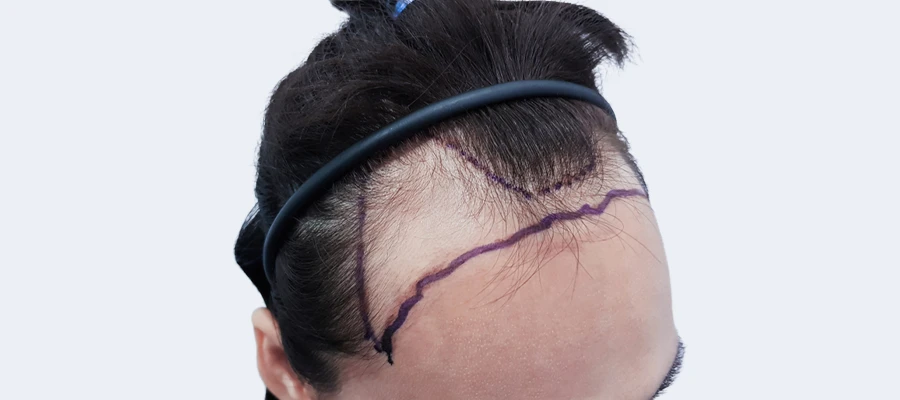
The basis of this method is the extraction of follicular units from the donor area without cutting all the hair and their transfer to thinning areas. In suitable candidates, the planned unshaven hair transplant aims to minimize visible changes after the procedure by preserving as much of the existing long hair as possible.
The procedure can be planned with complete or limited shaving. In some methods, only small donor areas containing the follicles to be harvested are trimmed, and the surrounding long hair covers these areas. In selected procedures, individual donor hair strands can also be trimmed.
The basic principle of hair transplantation remains the same. Healthy follicles are taken from the donor area and placed in the recipient area at the appropriate angles and directions. Leaving the hair long does not mean faster healing or a higher graft retention rate.
How is a hair transplant performed without shaving?
Before the procedure, the extent of hair loss, donor capacity, and the length of existing hair are assessed. Then, the donor area to be used for the Shave-Free Hair Transplant and any small sections to be trimmed if necessary are determined.
After local anesthesia, suitable follicular units are usually extracted one by one using the FUE principle. More controlled procedures may be necessary to avoid damaging the surrounding long hair during the extraction of the roots.
The harvested grafts are preserved under appropriate conditions and implanted in the planned areas of thinning. Working among the existing long hairs in the recipient area also requires care.
In practice, implant-assisted placement methods can be used. However, the key factor determining the unshaven approach is not only the placement device used, but also the extent to which the hair is trimmed during the procedure.
Who is suitable for unshaven hair transplantation?
Individuals who do not wish to completely shorten their hair and have suitable donor capacity can be considered for this method. Especially for those with limited or medium-sized hair areas, Shave-Free Hair Transplantation can be an option for those for whom preserving existing long hair is important.
Women and men with long hair may prefer this approach. Limited receding hairlines or specific thinning areas within the existing hairline may also be suitable cases.
In cases of extensive hair loss requiring a high number of grafts, performing the procedure completely unshaven can be technically more challenging. Safely visualizing the donor area and ensuring even extraction of grafts should be a priority.
In cases of active scalp diseases or hair loss types unsuitable for transplantation, shaving does not alter candidacy. The cause of the hair loss must be evaluated first.
What are the advantages of shave-free hair transplantation?
Maintaining a large portion of the existing hair length can help minimize changes in appearance after the procedure. Especially with long hair, the Unshaven Hair Transplant can allow small treatment areas in the donor region to be partially concealed by the surrounding hair.
This feature can be important for people who don’t want to cut their hair for work or social reasons. Long hair in the recipient area can also cover some of the early redness or scaling.
However, cosmetic privacy does not mean faster healing. Both donor and recipient areas undergo similar biological healing processes as with other hair transplant methods.
Another important advantage of the method is that, in suitable cases, it requires less extensive changes to the person’s existing hairstyle. However, technical suitability should always be prioritized over aesthetic preference.
What are the disadvantages of unshaven hair transplantation?
Seeing and extracting follicles individually among long hairs may require more technical precision. Therefore, unshaven hair transplantation may take longer than a completely shaved procedure for some individuals.
Limited visibility of the donor area can make it difficult to harvest a large number of grafts. In cases with larger openings and an increased number of grafts needed, limited or complete shaving may become more suitable.
Long hair requires special attention during post-operative care. It’s crucial to prevent the hair from tangling with the transplanted grafts or causing unnecessary friction during washing.
This method is not suitable for everyone. Compromising the number of grafts or donor safety in order to avoid shaving is not the right approach. Long-term results depend more on proper candidate selection and technical planning than on whether or not the hair is cut.
What are the differences between unshaven hair transplantation and conventional hair transplantation?
The main difference lies in the extent to which hair in the donor and sometimes recipient areas is trimmed before the procedure. In unshaven hair transplantation, not all hair is cut, whereas in standard shaved procedures, a wider shave may be performed to create a clearer working area.
In the shaved method, it may be easier to visualize the orientation of the follicles and the donor density during the procedure. This can facilitate faster work speed and graft distribution, especially with high graft numbers.
The main advantage of the unshaven method is that cosmetic appearance is better preserved. Long hair can partially conceal early signs of healing in the donor area.
In both approaches, the main goal is to safely extract healthy grafts and place them at the correct angles in the recipient area. Shaving style alone does not determine whether the result will be natural or permanent.
How to Prepare the Donor Area for Unshaven Hair Transplantation?
During preparation, the boundaries of the safe donor area and the distribution of follicles to be used are determined. Depending on the Shave-Free Hair Transplant method to be applied, small windows of hair may be shaved, or only selected hair strands may be shortened.
In window shaving, the longer hairs around the edges are preserved while the small areas underneath are trimmed. This way, when the hairs are left free, they can cover part of the shaved area.
In completely unshaven approaches, the graft extraction process may require more detailed work. The length of the hair does not alter the structure of the follicles under the skin, and the principles of safe extraction remain the same.
The primary goal in preparing the donor area is to ensure safe root harvesting before concealing its appearance. Excessive graft removal should be avoided, and a long-term donor reserve should be preserved.
How is a hair analysis performed before a hair transplant without shaving?
The assessment examines the cause, extent, and progression of hair loss over time. When planning the procedure for Shave-Free Hair Transplantation, donor density, hair strand thickness, and the amount of existing hair in the recipient area are evaluated together.
It is important to check for miniaturization in the donor area. Since long hair can create a visually high density, the actual follicular capacity should also be evaluated.
In the recipient area, the surface area of the bald area and the distribution of existing hair are examined. If a hairline plan is to be made, facial proportions and the likelihood of future hair loss are also taken into account.
Sudden or widespread hair loss should not be considered solely as a hair transplant option. Telogen effluvium, hormonal or nutritional causes, and certain scalp diseases may require prior evaluation.
How many grafts are needed for a hair transplant without shaving?
The required number of follicles varies depending on the size of the bald area, the existing density, and the desired visual coverage. Therefore, there is no standard number of grafts that can be applied to everyone for Shave-Free Hair Transplantation.
Limited hairline adjustments may require fewer grafts than extensive frontal or crown baldness. Hair thickness and the number of hairs per follicular unit also affect coverage.
Choosing an unshaven method does not directly reduce a person’s need for biological grafts. However, the technical working area can affect the amount that can be safely removed in a single session.
Donor reserve is always a key limit. Leaving enough follicles for future shedding is a crucial part of long-term planning.
How many grafts can be transplanted with unshaven hair transplantation?
There is no universal upper limit determining the number of grafts that can be transplanted in a single session. During a planned Shave-Free Hair Transplant, donor density, the size of the treatment area, the technique used, and the duration of the procedure should all be considered together.
In completely shave-free methods, very high graft numbers can be technically more challenging. Performing limited window shaving can facilitate controlled root extraction from a larger donor area.
Aiming for the highest possible number of grafts is not correct. Overusing the donor area can lead to permanent thinning and an uneven appearance.
Therefore, the amount of graft should not be determined solely based on the needs of the recipient area. Safe donor capacity and any potential additional procedures that may be required in the future must also be taken into account.
Is it possible to have a second hair transplant without shaving?
If sufficient donor reserve remains after the first procedure, a second application may be possible for some individuals. Having previously undergone a Shave-Free Hair Transplant does not, by itself, preclude the use of the same approach again, provided the donor area is in suitable condition.
The second procedure may be planned to increase hair density or to treat new bald patches that appear due to progressive natural hair loss. The success of the first transplant is crucial for accurately calculating the need for new grafts.
The donor area should be re-analyzed. The distribution of follicles removed in the previous procedure and the remaining density directly affect the number of safe grafts.
Each additional procedure reduces the limited donor reserve. Therefore, donor safety and long-term hair planning should be considered before considering a clean-shaven look in a second session.
Shave-Free Hair Transplant Prices 2026
The cost can vary depending on the number of grafts needed, the extent of hair loss, the characteristics of the donor area, and the type of unshaven hair transplant procedure used. Therefore, there is no single standard price for unshaven hair transplantation in 2026 that applies to everyone.
Frequently Asked Questions
Is unshaven hair transplantation really possible?
Extraction and transplantation of follicular units without cutting off all the hair is possible in selected individuals. The applied Shave-Free Hair Transplant can be performed completely without shaving, or by trimming small donor windows hidden under long hair.
Which approach is appropriate depends on the graft requirements and donor structure. When a large number of follicles are needed, a wider shave may provide a technical advantage.
In unshaven hair transplantation, is it true that the hair is not cut at all?
In some completely unshaven procedures, most of the hair can be left long, but depending on the method used, certain donor strands may need to be trimmed. Therefore, the term “Unshaven Hair Transplant” does not always mean that no hair strands will be cut.
In the limited shave method, small donor windows are trimmed. The surrounding long hair can then largely conceal these areas.
How long does a hair transplant without shaving take?
The total duration varies depending on the number of grafts, the structure of the donor area, and the chosen unshaven technique. Unshaven hair transplantation performed among long hair may require more detailed work and may therefore take longer than standard shaved procedures in some cases.
The process of extracting, preserving, and placing each graft individually affects the total time. Therefore, it is not accurate to give a fixed timeframe that applies to everyone.
How many grafts can be transplanted in a hair transplant without shaving?
The safe number of grafts is determined individually based on donor density, hair characteristics, and the size of the treatment area. Therefore, there is no single maximum number of grafts for everyone undergoing Shave-Free Hair Transplantation.
A completely unshaven approach may be technically limiting in cases of high graft demand. Instead of exceeding safe donor limits, a limited shave or an alternative plan may be preferred when necessary.
Who is not suitable for unshaven hair transplantation?
Individuals with insufficient donor capacity or those requiring a large number of grafts for very wide baldness may not be suitable for the completely unshaven method. Furthermore, individuals with active scalp diseases should have their hair loss and existing condition evaluated before considering the unshaven hair transplant.
If extensive miniaturization also affects the donor area, the safe source of grafts may be limited. Technical suitability should not be determined solely by the desire to avoid cutting the hair.
Is unshaven hair transplantation suitable for women?
This method can be considered for women who wish to preserve their long hair and have sufficient donor capacity. Especially in areas with limited space, Shave-Free Hair Transplantation can help the surrounding long hair partially conceal early signs of the procedure in the donor area.
However, common hair thinning in women can also affect the donor area. Therefore, the cause of hair loss and the safe donor capacity must be evaluated before choosing a method.