



What is Sapphire Hair Transplant?
The extraction of hair follicles one by one from the donor area and their placement into channels prepared in the recipient area using sapphire-tipped blades forms the basis of this method. In practice, Sapphire Hair Transplant is more related to the tool used in the channel opening phase of the FUE process than to a separate follicle harvesting technique.
Grafts are generally extracted from the back and sides of the head using the FUE principle. Then, micro-channels where the hairs will be placed can be prepared with tips made of sapphire material instead of metal blades.
The natural appearance of the result doesn’t depend solely on the material of the scalpel used. Hairline design, channel orientation, graft preservation, donor area management, and long-term planning for hair loss are also important.
The procedure does not create new hair follicles. It redistributes existing donor follicles to bald or thinning areas.
How is Sapphire Hair Transplant Performed?
In the first stage, the extent of hair loss, donor capacity, and the desired hairline are evaluated. Following local anesthesia, the follicular units required for Sapphire Hair Transplant are extracted one by one from the donor area, usually using the FUE method.
The harvested grafts can be separated according to their characteristics and preserved under appropriate conditions. In the next stage, small channels are prepared in the recipient area using sapphire-tipped blades for the placement of the grafts.
When creating the channels, the natural angle, direction, and planned distribution of the hair are taken into consideration. Then, the prepared grafts are carefully placed into these channels.
The sapphire tip used does not guarantee the success of the procedure itself. The crucial steps affecting the final outcome are the undamaged extraction of donor follicles, their storage under appropriate conditions, and their placement in the correct directions.
Who is a suitable candidate for Sapphire Hair Transplant?
Individuals with permanent hair loss and sufficient safe donor capacity may be candidates for this method after evaluation. Especially in androgenetic hair loss, Sapphire Hair Transplant can be used to reconstruct the hairline and different areas of thinning.
Candidate selection should be based on the cause of hair loss, regardless of the type of scalpel used. Donor density, hair thickness, age, rate of hair loss progression, and scalp health are all considered together.
Direct hair transplant may not be suitable for temporary or active hair loss. Telogen effluvium, active alopecia areata, and some types of inflammatory or scarring alopecia may require a different approach.
In individuals with insufficient donor capacity, using a sapphire tip does not result in obtaining more grafts. Selecting the right candidate is a more fundamental factor than the technical name suggests.
What are the key features of the Sapphire Hair Transplant Technique?
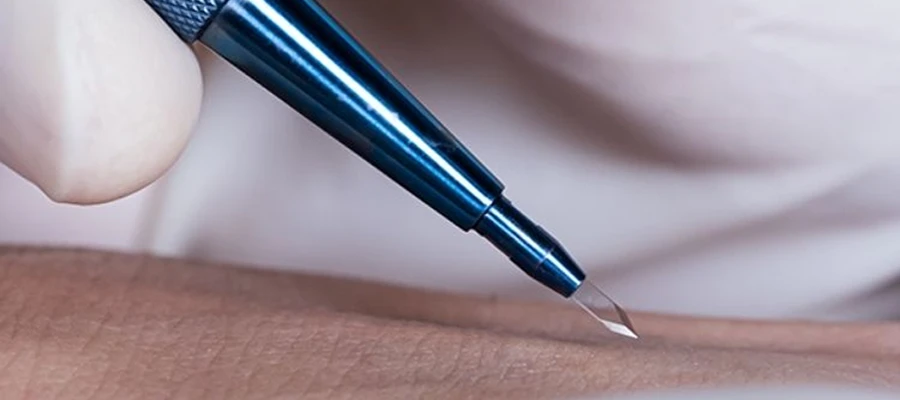
The distinctive feature of the method is the use of sapphire-tipped micro-blades during the preparation of graft channels in the recipient area. In this respect, Sapphire Hair Transplant can be considered a type of procedure where grafts taken with FUE are placed into pre-created channels.
Channel size and depth should be planned according to the characteristics of the grafts. The direction of the channels also affects the appearance of the transplanted hair after it grows.
Sapphire tips, with their sharp and smooth surface, can be used to create controlled incisions. However, it should not be assumed that the material alone will provide faster healing, a higher graft retention rate, or a definitively denser result.
Donor management, graft quality, and proper hairline design play a crucial role in the success of the procedure.
What is the role of sapphire tips in hair transplant?
Sapphire tips are surgical instruments used to create recipient channels where grafts will be placed. The material and design of these tips are one of the key factors that distinguish the Sapphire Hair Transplant approach from classic channel opening methods during the procedure.
Tips of varying widths can be selected according to the size of the grafts and the application area. The aim is to create a suitable channel for the graft to be placed while avoiding unnecessary traumatization of the surrounding tissue.
Not only the width of the channel is important, but also its depth and direction. Channels that are too deep or too shallow can affect the placement of grafts.
The use of sapphire material alone does not guarantee a natural result. How the tip is used, channel planning, and correct graft placement are just as important as the material used.
How is channel opening performed with a Sapphire Blade?
After the grafts are harvested, small incisions are prepared in the recipient area to match the hairline and density plan. At this stage, the sapphire tip selected for Sapphire Hair Transplant is applied to the skin, taking into account the desired angle and direction of future hair growth.
The channel size must be compatible with the follicular unit to be placed. Channels that are too wide can affect the stability of the grafts, while inappropriate depth can also pose problems with placement.
At the front hairline, a flatter, more natural transition is preferred. In the middle and crown areas, the natural growth pattern of the person’s existing hair is followed.
The number and distribution of channels are determined according to the targeted density. However, creating more channels does not always mean better results; tissue characteristics and blood supply must also be taken into consideration.
What are the differences between Sapphire Hair Transplant and Classic FUE?
Both approaches, which involve the individual extraction of donor follicles, are largely based on the same FUE principle. The main difference is that during Sapphire Hair Transplant, the recipient channels are prepared with sapphire tips, while in classic procedures, different surgical blades may be used.
Therefore, it is not accurate to consider the sapphire method as a completely independent hair follicle extraction technique from FUE. The term “Sapphire FUE” better describes the material used during the channel opening phase.
In both methods, the orientation, angle, distribution of grafts, and donor area management are important for achieving a natural result. The type of scalpel used does not replace these factors.
Recovery time and results are also affected by individual tissue characteristics, the scope of the procedure, and the technique used.
What are the differences between Sapphire Hair Transplant and DHI?
The main difference lies in the way the grafts are placed in the recipient area. Typically, during Sapphire Hair Transplant, channels are prepared beforehand using sapphire tips, and the grafts are then placed into these areas.
In the approach called DHI, grafts are mostly placed by loading them onto implanter pens. This allows the steps of channel creation and graft placement to occur in close proximity.
In both methods, the extraction of hair follicles from the donor area can be performed using FUE principles. Therefore, the main difference between DHI and sapphire stems mostly from the placement technique, not the follicle extraction stage.
No single method is automatically superior for everyone. The number of grafts, available hair, recipient area, and donor characteristics all influence the choice of technique.
In which types of hair loss is Sapphire Hair Transplant preferred?
Surgical hair transplant can be considered in cases of hair loss where there is permanent follicle loss and sufficient donor reserve is available. Especially in androgenetic hair loss , Sapphire Hair Transplant can be used to reduce thinning in the hairline, frontal area, mid-length, or crown.
In some cases of permanent hair loss due to scarring, hair transplant may be considered if tissue characteristics are suitable. However, since blood flow to scarred areas may differ from that of normal scalp, further evaluation is necessary.
Not all types of hair loss are suitable for surgical treatment. In cases such as transient telogen effluvium or active alopecia areata, the underlying cause must first be assessed.
The use of a sapphire tip does not change the candidacy criteria. Accurate diagnosis of hair loss is a more fundamental step than the choice of channel opening tool.
How is a hair analysis performed before Sapphire Hair Transplant?
Before the procedure, the cause, extent, and likelihood of future progression of hair loss are assessed. Determining the safe capacity of the donor area is just as important as identifying the needs of the recipient area for the planned Sapphire Hair Transplant.
In the donor area, follicular density, hair thickness, number of hairs per graft, and miniaturization can be examined. In the recipient area, the density of existing hair and the size of the bald area are assessed.
Age, family history, and how long the hair loss has been ongoing contribute to long-term planning. If there is sudden or widespread hair loss, the underlying causes may need to be investigated.
The analysis can determine the approximate graft requirement and hairline design. However, planning should be based not only on maximizing the number of grafts possible, but also on conserving the donor reserve.
Sapphire Hair Transplant Prices 2026
Costs can vary depending on the extent of hair loss, the number of grafts required, the characteristics of the donor area, and the scope of the procedure. Therefore, there is no single standard price for Sapphire Hair Transplant in 2026 that applies to everyone.
Frequently Asked Questions
Is sapphire hair transplant really more advantageous?
Sapphire tips can be used to prepare controlled and appropriately sized incisions during channel creation. However, it is not accurate to say that the Sapphire Hair Transplant method will definitely yield better results than classic approaches in every person.
Besides the tip used, donor capacity, graft preservation, channel angles, and hairline design also affect the outcome. The advantage of the method should be evaluated in conjunction with the individual’s hair structure and treatment plan.
What is the difference between sapphire hair transplant and standard FUE?
Both approaches can utilize FUE principles during the graft extraction phase. Essentially, in the Sapphire Hair Transplant method, recipient channels are prepared with sapphire-tipped blades, while classic FUE procedures may use different surgical tips.
Therefore, the sapphire method is not a completely separate graft harvesting method from FUE. The main difference lies more in the instrument used during the channel opening phase in the recipient area.
Is the tip used in sapphire hair transplant actually made of sapphire?
In this method, the term “sapphire” refers to the sapphire-material surgical tips used in preparing the recipient channels. The fundamental difference of the Sapphire Hair Transplant procedure is that these tips are used during the channel opening phase.
However, the material used alone does not determine the quality of the procedure. The size of the tip, the channel angle, depth, and the correct placement of the grafts are also important.
How long does a sapphire hair transplant take?
The total duration varies depending on the number of grafts, the characteristics of the donor area, and the size of the recipient area. In extensive Sapphire Hair Transplant procedures, the extraction of roots, preparation of channels, and placement of grafts can take several hours.
The procedure time may be longer in cases of high graft demand. Therefore, it is not possible to give a precise timeframe applicable to everyone based solely on the sapphire tip used.
How many grafts can be transplanted in a sapphire hair transplant?
The safe number of grafts that can be applied in a single session should be determined according to the individual donor capacity. During a planned Sapphire Hair Transplant, hair density, a safe donor area, hair thickness, and the size of the recipient area are evaluated together.
There is no universal maximum number of grafts. Reaching high numbers by overusing donor space can lead to permanent thinning, so safe limits should be prioritized.
Would 4000 grafts be enough for a Sapphire hair transplant?
While 4,000 grafts may provide significant coverage in the front and middle areas for some individuals, a different distribution may be necessary for extensive hair loss. Therefore, whether 4,000 grafts are sufficient for Sapphire Hair Transplant cannot be determined solely by the number.
The size of the bald area, hair thickness, number of hairs per graft, and donor capacity all affect the result. The same 4000 grafts can provide different visual densities in different individuals.
Does sapphire hair transplant hurt?
Since the procedure is mostly performed under local anesthesia, the aim is to keep significant pain under control. Although a brief stinging or burning sensation may be felt during the application of anesthesia, pressure and touch sensations are more common during Sapphire Hair Transplant.
Mild pain, tenderness, or tightness may occur after the procedure. Symptoms such as worsening pain, increased redness, discharge, or fever require evaluation.