



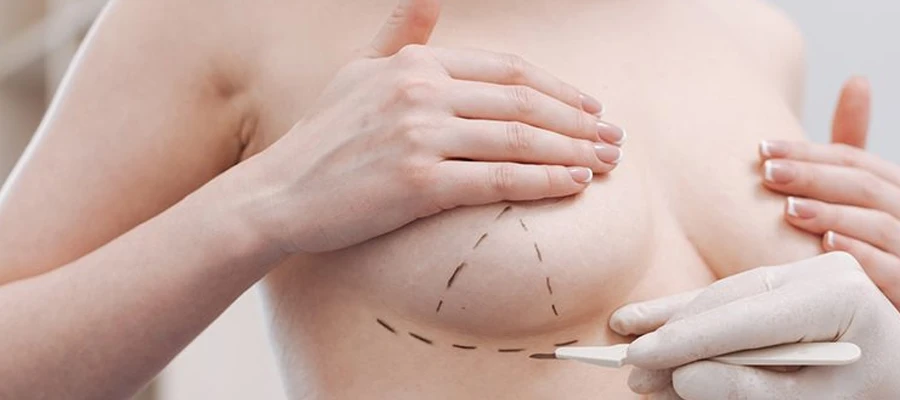
What is Breast Aesthetics?
Breast aesthetics is a general term for various surgical procedures aimed at altering the size, shape, position, or proportion of the breasts to the body. Planned according to individual anatomy, breast aesthetics is not a single operation; it represents a broad surgical field encompassing augmentation, reduction, lifting, and some asymmetry corrections.
Breast augmentation procedures may use breast implants or, in selected cases, the patient’s own fat tissue. Breast lift surgery may be considered when sagging is significant, and breast reduction surgery may be considered when there is excessive volume.
Some patients may require more than one procedure. For example, in a breast with sagging along with volume loss, using implants alone may not provide the desired shape.
The goal of the planning is not to create a standard breast appearance. The rib cage, existing breast tissue, skin quality, and the individual’s expectations should be evaluated together.
Why is breast aesthetic surgery performed?
When breast size, shape, or position causes discomfort, aesthetic surgical options may be considered. In suitable individuals, breast aesthetics can be performed to alter body proportions or correct significant structural differences.
Naturally small breast volume can be one of the reasons for a desire for breast augmentation. Volume loss and sagging that occur after pregnancy, breastfeeding, aging, or weight changes can also create a demand for surgery.
Excessively large and heavy breasts may not only create aesthetic problems. Some people may experience discomfort in the neck, shoulders, or back, and difficulty during physical activity.
Significant breast asymmetries can also be evaluated surgically. However, it should be remembered that small left-right differences are natural in the human body and perfect symmetry cannot be guaranteed.
Who is a suitable candidate for breast aesthetic surgery?
Adults who have completed breast development, are in good general health suitable for surgery, and have realistic expectations can be evaluated for treatment. When anatomical conditions are suitable, breast aesthetics can be an option for individuals who are bothered by issues such as volume, sagging, size, or asymmetry.
Eligibility is not determined solely by age. Breast tissue characteristics, skin elasticity, rib cage structure, and the individual’s medical history are also important factors.
Smoking can pose a risk for wound healing and certain surgical complications. Medications being used, previous surgeries, and existing medical conditions should also be evaluated.
If pregnancy or significant weight changes are planned in the near future, the timing of the surgery may also need to be considered. Pregnancy, breastfeeding, and weight changes can alter the resulting breast shape over time.
What problems can breast aesthetics correct?
Small breast volume, significant sagging, excessive size, and certain asymmetries can be addressed with different surgical methods. Depending on the cause of the problem, breast aesthetics can be planned as a single procedure or a combination of multiple methods.
In cases of volume deficiency, implants or, in selected cases, fat transfer may be considered. In cases of sagging, excess skin can be removed to reposition the breast tissue and nipple.
In cases of large breasts, tissue and skin can be reduced to create a smaller breast. If there is a significant difference between the right and left breasts, different surgical plans may be necessary for each side.
Surgery does not perfectly replicate natural anatomy. Breast base, rib cage asymmetry, and skin characteristics can all affect the final result. Therefore, the goal is to create a more balanced appearance within the existing anatomy.
How to Evaluate Breast Shape and Body Proportions?
Breast appearance is not evaluated solely based on current cup size or volume. When planning a personalized breast aesthetic procedure, shoulder width, rib cage, waist proportions, breast base, and existing breast tissue are all considered together.
Nipple position and inframammary fold shape are important factors in assessment. The volume, height, and base width of the right and left breasts are also compared.
If augmentation is planned, implant selection should not be based solely on the desired size. Chest width, tissue thickness, and skin capacity all influence the determination of the appropriate size.
In nipple lift or reduction procedures, the amount of tissue to be removed and the new position of the nipple are evaluated. The goal is to create a result that is harmonious with the body structure and within safe limits.
How is a breast aesthetic surgery examination performed?
During the initial assessment, the shape, size, skin texture, and differences between the left and right sides of the breasts are examined. Prior to planning breast aesthetic procedures, the breast tissue and the area around the nipple are also clinically evaluated.
The person’s surgeries, illnesses, and medications are inquired about. Information such as smoking habits and family history of breast disease may also be important.
If breast augmentation is being considered, the existing tissue thickness and the amount of soft tissue that can cover the implant are evaluated. For lift or reduction, the degree of sagging and excess skin are examined.
If there is a suspicious finding in the breast, the necessary breast evaluations should be completed before undergoing cosmetic surgery. Cosmetic surgery does not replace screening or diagnostic examination for breast diseases.
What measurements are taken before breast augmentation surgery?
During surgical planning, different anatomical measurements of the breast and rib cage may be taken. Evaluating features such as breast base width, nipple position, and inframammary fold is particularly important before breast aesthetic surgery.
The distances between the nipple and specific reference points on the breastbone can be measured. Differences in height and volume between the right and left breasts are also recorded.
In breast augmentation surgery, the width of the breast base is a crucial factor in implant selection. Focusing solely on implant volume can lead to overlooking natural body proportions.
In breast lift and reduction plans, excess skin and the desired nipple position are evaluated. Measurements support surgical design but do not determine the outcome alone.
Is a mammogram necessary before breast augmentation surgery?
Mammography is not automatically required for every individual undergoing only cosmetic surgery. Whether appropriate breast imaging methods are necessary before breast augmentation surgery can be determined based on age, individual risks, and current findings.
For individuals who are due for a mammogram according to the routine breast cancer screening program, it is important to have up-to-date screening records. Additional evaluation is necessary if there is a palpable lump, discharge, or other suspicious findings in the breast.
In young people, different imaging methods such as ultrasound may be used in certain clinical situations. Which method is appropriate should be determined based on individual characteristics.
Cosmetic surgery does not replace routine breast health checkups. Even in individuals who have received implants, future breast screenings using appropriate techniques should continue.
What are the types of breast aesthetic surgery?
The surgical method to be applied is determined according to the existing anatomical problem and the desired change. Therefore, breast aesthetics can encompass different procedures such as augmentation, reduction, lifting, fat transfer, and asymmetry correction.
Breast augmentation can be performed using silicone implants or, in selected cases, fat injection. Breast reduction involves the controlled reduction of excess breast tissue, fat, and skin.
The primary goal of a breast lift is to reshape sagging tissue and reposition the nipple to a more suitable location. If there is also a lack of volume, the lift can be combined with implants or, in some cases, fat transfer.
In treating asymmetry, it is not necessary to perform the same procedure on both breasts. Reduction in one breast and enlargement or different tissue adjustments may be required on the other. The surgical method should be chosen according to the individual anatomy.
Breast Augmentation Surgery Prices 2026
The cost varies depending on the type of surgery, the scope of the procedure, and the materials required. Therefore, there is no single standard price for breast augmentation surgery in 2026 that can be applied to all patients.
Frequently Asked Questions
How long does breast augmentation surgery take?
The duration of the surgery varies depending on the method and scope of the procedure. Breast aesthetics procedures involving only augmentation or reduction with implants, or both implants and breast lift, may not be completed in the same amount of time.
Asymmetry correction and revision of previous surgeries can also affect surgical duration. Therefore, it is not accurate to give a fixed time for all breast aesthetic procedures.
Is breast augmentation painful?
Since the operation is performed under anesthesia, the aim is to control pain during the surgery. After anesthesia, tightness, tenderness, and pain may be felt in the area where breast augmentation was performed.
The severity of discomfort varies depending on the surgical method used. Augmentation, reduction, and lifting do not have the same recovery experience. Unusual symptoms such as progressively worsening unilateral pain, significant swelling, or shortness of breath require evaluation.
How many days of rest are needed after breast augmentation surgery?
Rest requirements vary depending on the scope of the surgery and the individual’s daily activities. In the initial period after breast augmentation surgery, it may be necessary to limit heavy lifting and movements that put excessive strain on the chest area.
Safe and controlled movement is usually part of the recovery process, rather than complete bed rest. The time it takes to return to daily life can vary depending on the extent of the augmentation, reduction, or lifting surgery.
When can I return to work after breast augmentation surgery?
The time to return to work depends on the surgery performed and the physical demands of the profession. The return-to-work process after breast augmentation surgery may differ for someone working at a desk compared to someone working in a job requiring heavy lifting or intense arm movements.
Reduction in pain and swelling alone is not a sufficient criterion. Arm movement, wound healing, and limitations of the surgery performed must also be considered.
When can I lie on my side after breast augmentation surgery?
The time it takes to return to lying on your side can vary depending on the type of surgery performed and the healing process. Especially after breast augmentation surgery using implants, it may be advisable to avoid applying uncontrolled pressure to the breasts in the early stages.
Even after straightening or reduction, the incision sites need to be protected. Since there is no single best day for everyone, a personalized post-operative plan should be used regarding sleeping position.
When can I exercise after breast augmentation surgery?
Return to exercise should be planned gradually, taking into account the scope of the surgery performed. During the initial recovery period after breast augmentation surgery, it may be necessary to limit activities such as heavy lifting, running, and exercises that intensely work the chest muscles.
The transition from light walking to intense upper body training does not happen at the same time. Implant placement, wound healing, and the individual’s recovery rate all affect the exercise program.
Will there be scars after breast augmentation surgery?
A scar forms wherever a surgical incision is made. Depending on the type of breast augmentation procedure, the scar may be located only in the crease under the breast, around the nipple, or over a wider area.
Scars may be more noticeable initially and can change over time as they mature. There is no guarantee that they will become completely invisible. Genetic factors, skin structure, wound tension, and the healing process all influence the appearance of the scar.
Will breasts look natural after breast augmentation?
A natural appearance depends on more than just implant size. During a properly planned breast augmentation procedure, chest width, existing breast tissue, skin quality, implant size, and placement plane are all evaluated together.
Choosing an excessively large implant or insufficient tissue coverage can cause the implant edges to appear more prominent. A perfectly natural look cannot be guaranteed; the goal is to create a result balanced with the individual’s anatomy.
How long do breast implants last?
There is no universal expiration date that requires breast implants to be replaced after a certain number of years. However, in breast augmentation procedures using implants, there is no guarantee that the prostheses will remain problem-free for life.
Over time, reoperations may be necessary due to implant rupture, capsule contracture, positional changes, or aesthetic modifications. The condition of the implants and breast tissue should be evaluated with long-term follow-ups.