



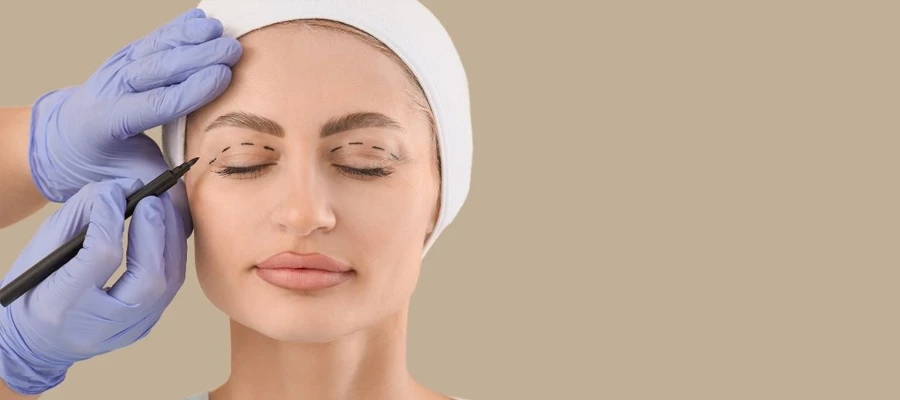
What is Eyelid Surgery?
Blepharoplasty is a surgical procedure aimed at correcting excess skin, prominent fatty tissue, and certain contour changes in the upper or lower eyelids. Eyelid aesthetics, planned according to individual anatomy, can be applied to the upper eyelid, the lower eyelid, or both areas simultaneously.
The primary goal in the upper eyelid is to reduce excess skin in a controlled manner and to regulate fatty tissue as needed. In the lower eyelid, puffiness, excess skin, and certain irregularities in the eyelid-cheek transition can be addressed.
The procedure isn’t solely performed to create a more youthful appearance. Excess upper eyelid skin can affect vision in some individuals.
Since removing too much skin or fat during surgery can negatively affect eyelid function, tissue preservation is important.
Why is eyelid surgery performed?
Skin laxity and changes in fatty tissue around the eyes that occur with aging can create a more tired or heavy appearance. When these changes become pronounced, Eyelid Aesthetics may be considered to reshape the anatomical contour around the eyes.
Excess skin on the upper eyelid can obscure the natural eyelid crease. In advanced cases, the skin can grow close to the lash line and affect the upper field of vision.
In the lower eyelids, the protrusion of fatty tissue can create a baggy appearance. Skin laxity and the hollowness at the eyelid-cheek transition can make this appearance more pronounced.
Blepharoplasty does not solve all eye area problems. Drooping eyebrows, prominent crow’s feet, or under-eye pigmentation may require different treatment approaches.
Who is a suitable candidate for eyelid surgery?
Adults with noticeable excess skin, puffiness, or structural contour changes in the upper or lower eyelids may be considered. When overall health conditions are suitable, eyelid surgery can be a surgical option for individuals bothered by changes around the eyes.
Eligibility isn’t determined solely by age. Some people may develop eyelid bags or excess skin at a younger age due to genetic factors.
Dry eye symptoms, previous eye surgeries, thyroid-related eye diseases, and certain eyelid problems should be evaluated before surgery. Diseases and medications that may affect the risk of bleeding are also important.
Realistic expectations are a fundamental part of surgical planning. The goal is not to completely alter facial expression, but to adjust the existing anatomy in a balanced way.
What are the signs of aging around the eyes?
With age, the thin skin, supporting tissues, and fat pockets around the eyes can undergo changes. Over time, skin laxity, puffiness, and contour irregularities may develop, which can lead to an eyelid aesthetics assessment.
The loosening of the upper eyelid skin can make the natural eyelid crease less visible. The lowering of the eyebrows over time can also make excess skin on the upper eyelid more noticeable.
Fat tissue under the lower eyelid can protrude forward, creating a bag-like appearance. The development of a hollow in the transition between the under-eye area and the cheek can also enhance the shadow effect.
Fine wrinkles and pigment changes are also part of aging. However, blepharoplasty does not eliminate all of these superficial skin changes.
What Causes Eyelid Drooping?
A sagging eyelid can be caused by various factors such as skin laxity, drooping eyebrows, or true eyelid ptosis (ptosis in the eyelid). Therefore, before planning an eyelid surgery, it’s necessary to determine which anatomical structure is causing the sagging.
With age, the skin on the upper eyelid can lose elasticity and accumulate in the crease. Genetic factors can cause these changes to appear earlier.
Drooping eyebrows can also create the appearance of excess skin on the upper eyelid. In true ptosis, however, there may be a problem with the mechanism that lifts the eyelid.
Standard blepharoplasty alone does not correct every case of ptosis. In necessary cases, different surgical procedures targeting the structures that lift the eyelid may be planned.
How does excess skin form on the upper eyelid?
Decreased skin elasticity and changes in the supporting tissues around the eyes over time can cause upper eyelid creases. When significant excess skin develops, eyelid surgery can be considered to reduce the unnecessary skin in a controlled manner.
Genetic factors, aging, and eyebrow position all affect the appearance of the upper eyelid. In some individuals, a naturally low eyebrow structure can make the accumulation of skin on the eyelid more noticeable.
The amount of skin that can be removed must be carefully determined during surgical planning. Removing too much skin can lead to problems such as difficulty in fully closing the eye, dryness, and discomfort.
Therefore, the goal is not to make the eyelid as taut as possible. Maintaining the eyelid’s natural movement and protective function is a priority.
Why do lower eyelid bags become more prominent?
One of the main causes of puffiness is the increasing visibility of fat deposits under the lower eyelid over time. While this appearance may necessitate eyelid surgery in individuals with a genetic predisposition, it can also develop at a younger age.
With age, the loosening of supporting tissues can contribute to fat becoming more prominent. Thinning and sagging of the lower eyelid skin can make bags under the eyes more visible.
Hollowness under the eyes can also enhance the shadow created by the bags. Therefore, it is not sufficient to assess only the amount of protruding fat.
In modern surgical planning, complete removal of fat tissue is not always the goal. In some cases, preserving or repositioning the fat can provide a more balanced flap-cheek transition.
What is the difference between under-eye bags and under-eye hollows?
Under-eye bags refer to a protruding volume of tissue, while hollowness refers to a contour that recedes compared to surrounding tissues. It is important to differentiate between these two problems when planning eyelid aesthetics during an examination.
In puffiness, the fatty tissue under the lower eyelid may be prominent. In hollowness, a lack of volume or an anatomical groove in the transition between the under-eye area and the cheek is noticeable.
Both problems can coexist in the same person. The presence of a hollow area just below the bag can increase the difference in light and shadow, making the area around the eyes look more tired.
Not all bags under the eyes are treated the same way, as simply removing fat can worsen the depression. Tissue-sparing or fat-repositioning methods may be considered in selected cases.
Is it possible to have a second eyelid surgery?
Individuals who have previously undergone blepharoplasty may develop new age-related changes over time, or retain issues from the initial operation. Eyelid surgery can be performed a second time under suitable anatomical conditions, but revision surgery requires different planning than the initial operation.
The amount of skin and fat removed in the previous surgery is important. Scar tissue and the existing closing function of the eyelid should be evaluated in detail.
Aggressive tissue excision after removing excess skin from the eyelid can lead to functional problems. If there is retraction or positional change in the lower eyelid, supportive procedures may be necessary.
The goal of revision surgery is not always to remove more tissue. In some cases, supporting or repositioning the missing tissue is more important.
Eyelid Surgery Prices 2026
The cost of surgery can vary depending on whether the upper eyelid, lower eyelid, or both areas are treated. Therefore, there is no single standard price applicable to everyone for eyelid surgery in 2026.
Frequently Asked Questions
At what age is eyelid surgery performed?
There is no specific age limit for this surgery. Eyelid surgery can also be considered in younger adults due to genetically inherited early-onset puffiness or excess skin.
How long does eyelid surgery take?
The duration of the operation varies depending on whether the upper, lower, or all four eyelids are treated. Eyelid surgery involving only a limited upper eyelid procedure versus lower eyelid fat reshaping may not be completed in the same amount of time.
Does eyelid surgery hurt?
During the surgery, pain is controlled using local anesthesia, sedation, or other appropriate anesthesia methods. After the procedure, tightness, sensitivity, burning, or mild discomfort may be experienced in the areas where eyelid surgery was performed.
How many days of rest are needed after eyelid surgery?
In the initial days, swelling and bruising may necessitate limiting daily and social activities. During the early recovery period after eyelid surgery, keeping the head elevated and avoiding strenuous physical exertion may be recommended.
When does the face return to normal after eyelid surgery?
As noticeable swelling and bruising decrease, the area around the eyes gradually begins to look more natural. However, social recovery and full tissue maturation after eyelid surgery do not occur at the same time.
When does swelling occur most frequently after eyelid surgery?
Swelling usually becomes noticeable in the early period after surgery and can vary from person to person. It is possible for swelling to increase in the first few days after eyelid surgery and then gradually decrease.
How many days does bruising last after eyelid surgery?
The duration of bruising can vary depending on the scope of the procedure, the individual’s skin characteristics, and bleeding tendencies. Bruising may spread towards the upper cheeks, especially after eyelid surgery where the lower eyelid is also treated.