



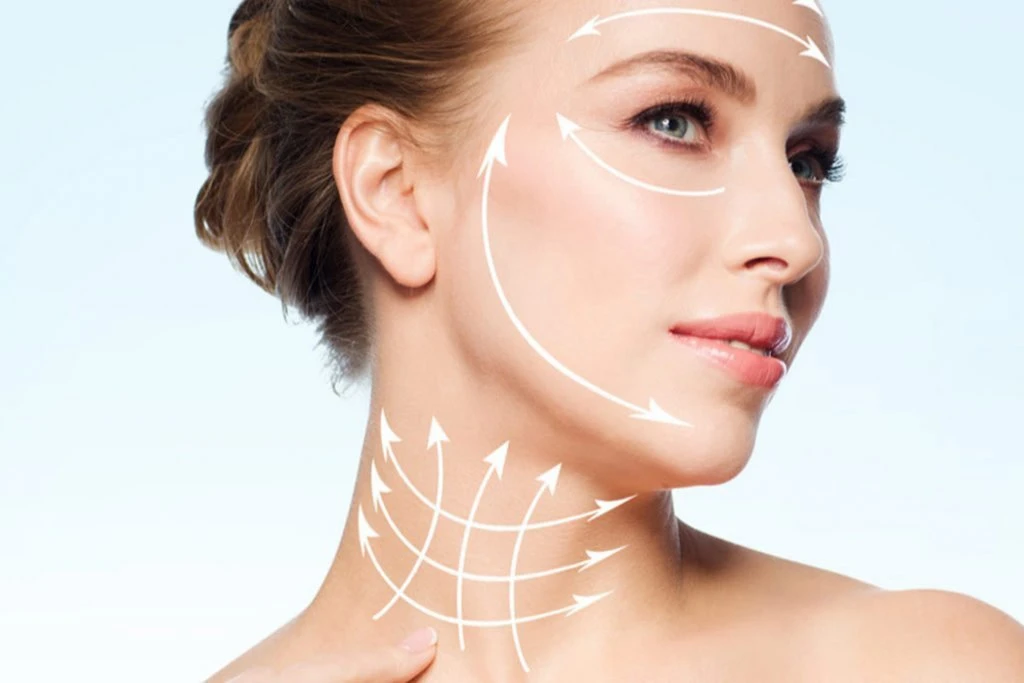
What is a Face and Neck Lift?
Facelift surgery is a surgical procedure aimed at correcting sagging and contour changes in the lower face and neck caused by aging. Planned according to the individual’s anatomy, a facelift may involve restructuring the underlying supporting tissues and neck structures, rather than simply lifting the skin.
A facelift can address the lower cheeks, jawline, and lower facial contour. A neck lift, on the other hand, can focus on loose skin, neck bands, and contour problems under the chin.
The technique to be applied is not the same for everyone. Skin quality, the distribution of facial fat tissue, the condition of the supporting layer called SMAS, and the condition of the neck muscles affect the planning.
The goal is not to completely alter the face or stop aging. The aim is a more balanced and natural transition between the face and neck.
Why are face and neck lifts performed?
With age, the supporting tissues of the face may loosen, fat distribution may change, and skin elasticity may decrease. When these changes become pronounced, a Face and Neck Lift may be considered to reshape the contour of the lower face and neck.
A blurred jawline and sagging lower cheeks are common reasons for seeking surgery. Loose skin or prominent muscle bands in the neck can also create an older appearance.
The goal of surgery is not to eliminate all wrinkles. Fine lines, skin blemishes, and changes in skin texture may require different treatments.
A facelift alone does not completely correct volume loss. Individuals with significant volume deficiency may consider various complementary methods.
Who is a suitable candidate for a face and neck lift?
Adults with significant tissue laxity in the lower face and neck area may be considered for surgical evaluation. When general health conditions are suitable, a Facelift and Neck Lift can be an option for individuals with sagging that cannot be adequately corrected with non-surgical methods.
Eligibility is not determined solely by chronological age. Skin elasticity, facial anatomy, degree of sagging, and the individual’s overall health are also important factors.
Smoking can pose risks, particularly to wound healing and skin circulation. Blood-thinning medications and certain health conditions are also considered in surgical planning.
Realistic expectations are important. Surgery does not stop facial aging and does not create perfect symmetry. The goal is to achieve a more balanced contour within the existing anatomical limits.
What are the signs of aging in the face and neck area?
Aging isn’t just about wrinkles forming on the skin. Over time, changes can occur in the skin, fat tissue, muscles, and deeper support structures that may warrant a Face & Neck Lift assessment.
Sagging in the lower cheeks can make the jawline appear more uneven. Looseness under the chin can reduce the definition of the neck angle.
Vertical muscle bands may develop in the neck, and excess skin may become more visible over time. The location and volume of facial fat tissue can also change with age.
Not everyone experiences the same aging pattern. Genetic factors, sun exposure, smoking, weight changes, and skin type can all influence the speed at which signs appear.
What Causes Facial Sagging?
Facial sagging develops as a result of a combination of decreased skin elasticity and changes in the deep supporting tissues. When significant laxity occurs, a Face and Neck Lift treatment can focus not only on the surface skin but also on the underlying anatomical structures.
With age, the properties of collagen and elastic structures change. The volume and distribution of facial fat tissue can also differ over time.
Relaxation in deep tissues that support the face, such as the SMAS, can contribute to sagging in the lower cheeks and jawline. Large weight changes can also increase skin laxity.
Simply pulling the skin excessively taut will not produce a natural result. The surgical plan needs to consider the different layers of the face and the individual anatomy.
What Causes Neck Sagging?
Loss of elasticity in the neck skin, changes in the subcutaneous fat tissue and platysma muscle can contribute to sagging. When the neck contour changes significantly, these structures need to be evaluated individually as part of a Face & Neck Lift procedure.
With age, the skin on the neck can loosen. The edges of the platysma muscle can become more prominent, forming vertical neck bands.
Fat accumulation under the chin can also obscure the neck angle. However, not all neck fullness is solely due to fat. A small or receding chin can also affect profile appearance.
Even after weight loss, while fat decreases, excess skin may remain. Therefore, the choice of treatment should be based on the underlying cause of the sagging.
How does jawline indecision occur?
Loss of jawline definition may be related to sagging lower facial tissues, fat distribution, and jaw anatomy. When sagging is present in the lower cheeks, a Face and Neck Lift may be considered to reshape the soft tissue contour around the jawline.
With age, the downward displacement of the lower cheek tissues can create irregular contours along the jawline. Loosening of the neck skin can also make this boundary appear less defined.
Fat accumulation under the chin is another contributing factor. However, liposuction alone cannot always correct significant skin sagging.
Bone structure is also important. If the jaw is small or set back, even if the soft tissues are corrected, the appearance of the jawline may remain anatomically limited.
How to Correct Sagging Skin in the Chin Area?
Once the source of the sagging under the chin is determined, the appropriate method is selected. If there is significant skin laxity and sagging in the neck tissues, a Face and Neck Lift may be considered among the options that can provide a more comprehensive correction.
If the problem is primarily localized fat accumulation and skin elasticity is sufficient, more limited methods like liposuction may be suitable for some individuals. However, it may not be possible to eliminate loose skin solely by removing fat.
If there is separation or banding in the platysma muscle, structural adjustments to the muscle may be necessary. Excess skin can also be repositioned within an appropriate surgical plan.
The appearance of a double chin is also affected by the structure of the jawbone. Therefore, treatment should not be determined solely based on the amount of fat under the chin.
How is facial oval deformity treated?
Sagging lower cheeks and irregularities in the jawline can alter the oval or more defined contour of the face as it was in youth. In cases of advanced tissue laxity, a Face and Neck Lift can be performed to reposition the lower facial tissues to a more appropriate position.
During surgery, not only is excess skin removed. Depending on the need, adjustments can be made to the SMAS and other supporting tissues.
If sagging in the neck also affects the facial oval, planning both areas together can provide a more balanced transition. Additional methods may be necessary in areas with volume loss.
Every face has a different initial anatomy. The goal isn’t to apply a specific face shape to everyone, but to create a more balanced contour within the individual’s natural facial proportions.
How to tighten sagging skin on the lower face?
Depending on the degree of sagging in the lower cheeks and jawline, surgical or non-surgical methods may be considered. In cases of advanced laxity, a Face and Neck Lift may allow for the repositioning of deeper supporting tissues along with the skin.
For mild tissue changes, more limited applications may be considered. However, it is not always possible to completely remove significant excess skin using non-surgical methods.
Facelift techniques can vary from person to person. Some methods focus on manipulating the SMAS layer, while more comprehensive techniques may target different anatomical planes.
Increasing the scope of surgery does not automatically lead to better results. The appropriate technique should be chosen based on the degree of sagging, facial anatomy, previous procedures, and safety considerations.
Face and Neck Lift Prices 2026
Surgery that only addresses the lower face is not the same as surgery that comprehensively reshapes both the face and neck. Intervention in the platysma muscle of the neck, removal of excess skin, or reshaping of fatty tissue under the chin can alter the scope of the surgery.
Frequently Asked Questions
At what age is a facelift performed?
There is no specific age limit that everyone must meet for surgery. The degree of sagging requiring a facelift, skin characteristics, facial anatomy, and overall health are more important factors than a person’s chronological age.
How long does a facelift and neck lift surgery take?
The duration of the operation depends on the surgical technique to be used and the scope of the procedures to be performed on the face and neck. This includes the reshaping of neck muscles and the treatment of different facial layers.
Is a facelift painful?
Since the surgery is performed under anesthesia, the aim is to control pain during the procedure. In the early recovery period, tightness, tenderness, numbness, and mild to moderate discomfort may be experienced in the areas where a facelift was performed.
Sudden and severe pain, especially rapidly increasing swelling or bleeding on one side, should not be considered a normal sign of healing. Such symptoms may require prompt evaluation.
How many days of rest are needed after a facelift?
During the initial recovery period, swelling, bruising, and tightness may limit daily activities. Depending on the scope of the surgery, the time to return to social and physical activities after a facelift varies from person to person.
When is the swelling most pronounced after a facelift?
Swelling usually becomes noticeable in the early days after surgery, but the time it reaches its peak is not the same for everyone. In the initial period after a Face and Neck Lift, the swelling in the face and neck may look different on each side.
When does the face return to normal after a facelift?
The tissues don’t fully heal at the same time as the face begins to look more natural in daily life. Swelling, bruising, stiffness, numbness, and temporary asymmetries may occur in the first few weeks after a facelift.