


What is Buttock Augmentation (BBL)?
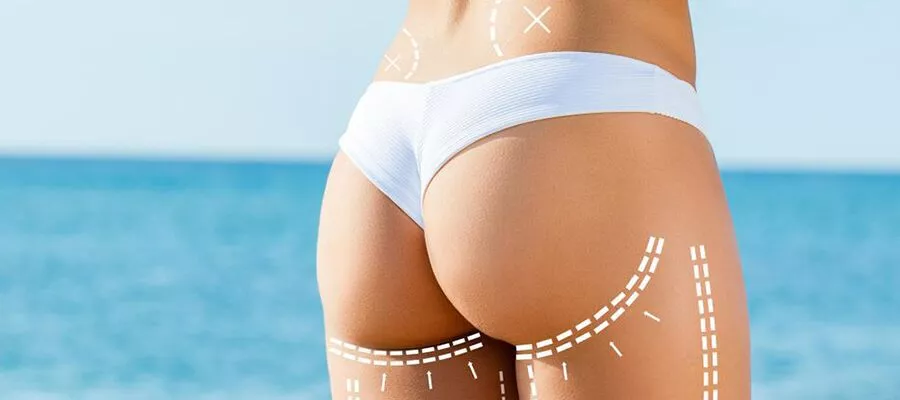
Body contouring surgery that involves transferring the patient’s own fat tissue from specific areas of the body to the buttocks area is known as BBL. Also referred to as Brazilian Butt Lift (BBL), this procedure aims to alter the volume and contour of the buttocks while creating more balanced body proportions in surrounding areas through liposuction.
The procedure is not simply a lift in the classic sense. Fat removed via liposuction is prepared and transferred to the buttock area in appropriate anatomical planes. It is not expected that all of the injected fat will remain permanently.
BBL is a surgical procedure with significant risks. Uncontrolled delivery of fat into muscle or deeper tissues can lead to serious complications such as fat embolism. Therefore, planning fat injection in safe anatomical planes is critically important.
How is Buttock Augmentation (BBL) Performed?
The operation is planned after evaluating the body structure and the areas from which fat can be harvested. In suitable patients, during Buttock Augmentation (BBL), fat tissue is first removed from the determined areas using the liposuction method.
The harvested fat is prepared for injection. It is then transferred in controlled amounts to areas of the buttocks that require volume and contouring. The goal is not simply to create the highest possible volume.
From a safety perspective, the anatomical plane in which the fat is injected is of paramount importance. Since deep intramuscular injection can increase the risk of serious complications, the fat must be kept in the safe subcutaneous tissue. In current safety approaches, real-time ultrasound monitoring of the injection cannula’s position is also an important safety practice.
After surgery, the areas where liposuction and fat transfer were performed heal together.
Who is a suitable candidate for buttock augmentation (BBL)?
Adults who wish to alter the volume or shape of their buttocks using their own fat tissue and have sufficient donor fat may be considered for surgery. When general health conditions permit, buttock augmentation (BBL) may be an option for some individuals who are dissatisfied with their buttock projection or body proportions.
Candidacy is not determined solely by the desired buttock size. Skin quality, existing buttock shape, fat distribution, and areas from which fat can be harvested should all be evaluated together.
Smoking and certain health problems can affect wound healing and surgical risks. Blood clotting issues and medications should also be evaluated before surgery.
Individuals with very low body fat percentages may not have sufficient donor fat. In such cases, different aesthetic options may be considered.
Why is BBL surgery performed?
Changing the volume, projection, and proportion of the buttocks to surrounding body areas are among the primary goals of the operation. When the individual anatomy is suitable, Buttock Augmentation (BBL) can be planned not only to add volume to the buttocks but also to reshape the overall body contour.
Reducing excess fat in the waist, abdomen, or flanks through liposuction can contribute to a more defined appearance of the buttocks. Therefore, the overall look changes when both the areas from which fat is removed and the areas to which fat is added are planned together.
Naturally flat or limited-volume hips can be a reason for seeking surgery. Volume loss due to weight changes may also be a factor in consideration.
BBL is not a weight-loss surgery. The goal is not to significantly reduce body weight, but rather to create contour changes using existing tissues.
How to Shape Your Buttocks with BBL?
The areas of the buttocks that need volume are determined by evaluating the overall proportions of the body. During planning, buttock augmentation (BBL) can be designed taking into account not only the rear view but also the side profile and the waist-hip transition.
The areas where liposuction is performed significantly affect the appearance of the buttocks. Controlled reduction of fat in the waist and flank areas can make the buttocks appear more defined.
The goal of fat transfer is not to inject equal amounts of fat into each area. Existing asymmetry, hip width, projection, and soft tissue capacity are all taken into consideration.
Targeting excessive volume does not guarantee a safe or natural result. The injection plan should be based on individual anatomy, as the volume the tissue can safely accept varies from person to person.
Which parts of the body are used to harvest oil for BBL?
The areas from which fat is taken are determined according to the distribution of fat in the person’s body. When a suitable amount of fat tissue is available, the abdomen, waist, flanks, back, or thighs can be considered as donor areas for Buttock Augmentation (BBL).
It is not necessary to harvest fat from the same areas of each patient. The goal is to obtain sufficient fat while leaving as balanced a contour as possible in the donor areas.
Shaping the waist and flanks can alter the visible proportions of the hips. Therefore, liposuction is planned not only for the purpose of removing fat, but also as part of body contouring.
The capacity of the donor area is not unlimited. Performing excessive liposuction can increase the risk of uneven contouring, laxity, and other complications. The amount of fat removed should be determined within safe surgical limits.
How is fat injection performed in BBL surgery?
After the fat tissue obtained through liposuction is properly prepared, it is transferred to the buttock area in a controlled manner. During the surgery, the aim for buttock aesthetics (BBL) is to distribute the fat in small amounts and to the planned safe tissue planes.
Injection depth is critically important for safety. Injecting fat into deeper tissues in the hip area, where large blood vessels are located, can pose a serious risk of fat embolism. Therefore, it is important that fat transfer is performed in the subcutaneous tissue above the muscle.
Real-time ultrasound imaging of the cannula tip can help track the injection plane. The amount to be injected is also determined taking into account the tissue’s capacity and anatomical limitations.
How much oil is needed for BBL?
The required amount of fat varies depending on the initial volume of the buttocks, the desired change, and the individual’s donor area capacity. Therefore, there is no fixed amount in milliliters that can be applied to everyone for Buttock Augmentation (BBL).
Not all of the fat removed during liposuction is directly injected into the buttocks. The amount of usable fat may vary during the preparation of the harvested tissue.
If there is asymmetry between the two sides of the hip, the injection amounts may also differ. The volume that the tissues can safely accept also limits the planning.
Injecting more fat does not automatically mean more successful or lasting results. Maintaining a safe anatomical plane, appropriate tissue capacity, and balanced shaping are more important than the total volume injected.
Can BBL be performed on frail individuals?
In individuals with low body fat percentages, the feasibility of the surgery depends on the amount of donor fat available. Buttock augmentation (BBL) with more limited volume goals may be considered in some thin individuals when sufficient fat is available in suitable areas of the body.
In very thin individuals, it may not be possible to obtain sufficient fat through liposuction. Furthermore, limited fat reserves also limit the potential increase in volume that can be created in the buttocks.
Gaining weight uncontrollably solely for the purpose of undergoing BBL (Baby-Led Behavior Enhancement) is not a suitable approach. Weight fluctuations can unpredictably affect body fat distribution.
In cases of insufficient fat reserves, expectations need to be re-evaluated. The goal is to determine the modification that can be performed within safe limits and appropriate to the individual’s anatomical structure.
Buttock Augmentation (BBL) Prices 2026
The cost of surgery can vary depending on the number of liposuction areas to be treated, the scope of the operation, and the body contouring plan. Therefore, there is no single standard price for Buttock Augmentation (BBL) in 2026 that can be applied to all patients.
Frequently Asked Questions
How long does BBL surgery take?
The duration of the operation varies depending on the number of areas to be liposuctioned and the extent of fat transfer. Buttock aesthetics (BBL) procedures, where multiple areas are reshaped, may take longer than those involving more limited fat transfer.
Anesthesia preparation and surgical planning also affect the total duration. Therefore, it is not accurate to give a fixed surgery time that applies to all patients.
Is BBL surgery painful?
Since the operation is performed under anesthesia, the aim is to control pain during surgery. After the effects of the anesthesia wear off, pain, tightness, tenderness, and swelling may occur in the areas where buttock augmentation (BBL) was performed.
Discomfort may not be limited to the buttocks; areas where liposuction was performed may also be tender. Increasingly severe pain, shortness of breath, chest pain, fainting, or significant general malaise require immediate evaluation.
How many days of rest are needed after BBL?
Rest requirements depend on the size of the liposuction areas, the extent of the surgery, and the individual’s recovery rate. In the early stages after buttock augmentation (BBL), strenuous physical activity should be limited, and the area where fat was transferred should be protected from unnecessary pressure.
Complete bed rest is generally not the goal; safe early movement is important for circulation. Return to daily activities should be gradual, according to the individual recovery plan.
When can you return to work after BBL?
The time to return to work may vary depending on the physical demands of the job and the amount of time spent sitting. For a job requiring long periods of sitting at a desk, the post-buttock augmentation surgery (BBL) work schedule may differ depending on whether the work is standing or remote.
Returning to jobs involving heavy lifting and intense physical activity may take longer. Return to work should be assessed not only based on pain reduction but also on postoperative pressure and activity restrictions.
When can one sit up after BBL?
When direct and sustained pressure on the buttocks can be increased depends on the surgical plan. Following buttock augmentation (BBL) surgery in the early recovery period, it is important to follow individual instructions regarding sitting time and position.
There is no single number of days that can be applied to all patients. If necessary, sitting time may be limited, or positions that distribute pressure to different areas may be recommended. Restrictions are reduced as recovery progresses.
When can I rest normally after BBL?
Sleeping position can be planned to reduce pressure on the area where fat transfer was performed. During the initial recovery period after buttock augmentation (BBL), it may be necessary to avoid positions that put prolonged pressure directly on the buttocks.
The suitability of lying on your stomach or side depends on the liposuction areas and the individual’s surgical plan. Since there is no single ideal time to return to a normal sleeping position, personal recovery instructions should be followed.
How much of the fat gained after BBL (Behavioral Hyperplasia) is permanent?
While some of the injected fat cells survive by receiving blood flow in the new area, others may be lost during the healing period. Therefore, there is no fixed and guaranteed percentage of fat retention after buttock augmentation (BBL) that can be applied to everyone.
Some of the volume gained in the first few weeks may be due to swelling. As the tissues heal, the appearance changes, and the remaining fat becomes more stable over time. Results can also be affected by weight fluctuations.