



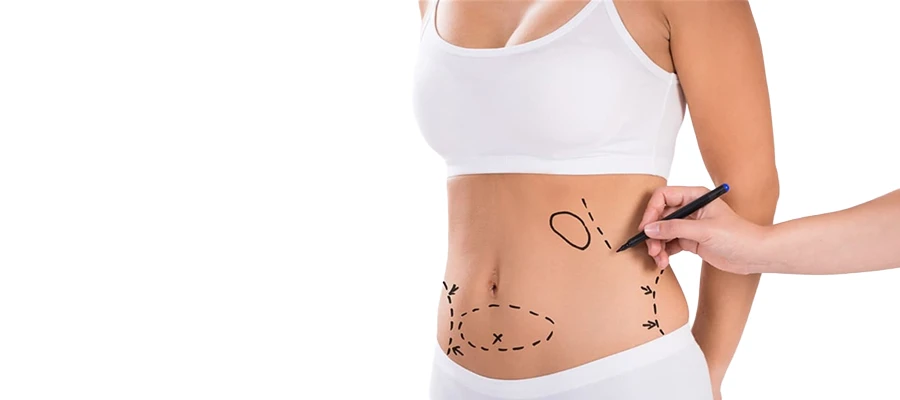
What is liposuction?
Liposuction is a surgical body contouring procedure that involves the controlled reduction of subcutaneous fat tissue accumulated in specific areas of the body using thin cannulas. Planned according to individual anatomy, liposuction aims to alter body contours by reducing localized fat deposits rather than achieving overall weight loss.
During the procedure, cannulas are inserted under the skin through small incisions. Fat cells are freed using the appropriate technique and removed with a vacuum system. The surgical process may vary depending on the method used.
Many areas can be treated, including the abdomen, waist, hips, thighs, and around the knees. However, not every area with fat deposits is suitable for liposuction.
Visceral fat, particularly that located around internal organs in the abdomen, cannot be removed with this method. In individuals with significant skin sagging, fat reduction alone may not provide sufficient tightening.
Why is liposuction performed?
One of the primary goals of the procedure is to reduce persistent subcutaneous fat deposits in specific areas despite diet and physical activity. In suitable individuals, liposuction is performed to reshape proportions between body contours rather than drastically reducing body weight.
Due to genetic fat distribution, even people of normal weight may have noticeable fat accumulation in areas such as the abdomen, waist, hips, or thighs. Shaping these areas can create a more balanced body contour.
The procedure can also be combined with other cosmetic surgeries. For example, it can be part of the liposuction process in tummy tucks or surgeries where the person’s own fat is transferred to a different area.
The goal of surgery is not to create a perfect body shape. Bone structure, muscles, skin quality, and existing fat distribution all affect the outcome.
Who is liposuction suitable for?
Adults whose general health is suitable for surgery and who have persistent subcutaneous fat deposits in specific areas may be evaluated for treatment. When body weight is relatively balanced, liposuction may be a more suitable option for correcting localized contour problems.
Good skin elasticity is important. The ability of the skin to adapt to the new contour after fat removal affects the appearance of the result.
In individuals with significant excess skin, liposuction alone may not correct sagging. In some cases, different skin removal or tightening procedures may be necessary.
Smoking habits, circulatory problems, certain chronic diseases, and medications should be evaluated before surgery. Realistic expectations are also important because the procedure will not completely eliminate cellulite, stretch marks, or all body irregularities.
In which areas can liposuction be applied?
Treatment areas are determined according to the individual’s subcutaneous fat distribution and anatomy. When suitable tissue characteristics are present, liposuction can be applied to different areas such as the abdomen, waist, back, hips, buttocks, thighs, and knees.
In some individuals, smaller areas such as the arms and under the chin can also be treated. However, not every anatomical area is suitable for the removal of the same amount of fat.
The surface and deep distribution of fat affects the processing plan. Excessive or uneven fat removal can create depressions, undulations, and asymmetry.
The areas to be treated should not be considered in isolation. For example, instead of focusing solely on reducing abdominal fat, evaluating the waist and flanks along with overall body proportions can help create a more balanced contouring plan.
Is liposuction a weight loss method?
This procedure is not a treatment for obesity or a general weight loss method. Liposuction, which aims at body shaping, primarily reduces localized fat tissue located under the skin.
Subcutaneous fat does not make up a significant portion of body weight. Muscle, bone, organs, fluids, and visceral fat in the abdomen are also components of total weight.
Therefore, changes in weight after surgery are not the only accurate measure for evaluating the aesthetic outcome. Swelling and fluid injections can temporarily affect body weight in the early stages.
For overweight individuals, sustainable weight management may be more appropriate first. Significant weight gain after surgery can lead to the growth of untreated and remaining fat cells, altering body contours once again.
How to Reduce Localized Fat with Liposuction?
In the designated areas, subcutaneous fat tissue is reduced in a controlled manner using cannulas advanced through small incisions. During the surgical plan, liposuction focuses not only on removing as much fat as possible but also on creating a smooth transition and balanced body contour.
The goal is not to completely eliminate the fat layer. Leaving an appropriate amount of fat between the skin and deeper tissues is important for a natural look.
The direction of cannula movement and the levels at which fat is removed can affect the contouring result. Excessively superficial or uneven treatment can cause undulations.
Although the number of regional fat cells decreases, the remaining cells can grow with weight gain. Therefore, surgery is not a replacement for long-term weight control.
How is a body analysis performed before liposuction?
Surgical planning doesn’t only focus on areas that appear fatty. During the examination, the patient’s overall body proportions, skin structure, fat distribution, and existing asymmetries are evaluated together.
Assessment while standing is important because the distribution of fat and skin can change in the lying position. The transitions between the abdomen, waist, hips, and thighs can be examined from different angles.
Excess skin and muscle structure are also taken into consideration. For example, the bulge in the abdomen may not be entirely due to subcutaneous fat. Abdominal wall laxity or visceral fat can also affect the appearance.
Previous surgeries and liposuction procedures may have created contour irregularities. These areas should be further evaluated when developing a new surgical plan.
Why is ideal weight important before liposuction?
Relatively stable body weight helps to plan the contour created by surgery in a more predictable way. In individuals close to their target weight, liposuction can focus on shaping remaining localized fat deposits rather than overall weight loss.
Significant weight loss after surgery can increase skin laxity and alter the created contour. Significant weight gain can also lead to the enlargement of remaining fat cells.
No single ideal weight or body mass index is suitable for all patients. Overall health, fat distribution, and surgical scope should be evaluated together.
Using rapid weight loss methods solely to be eligible for liposuction is not advisable. Nutritional status and a stable body weight are also important for wound healing.
How is skin elasticity assessed before liposuction?
Skin quality affects how well the skin can adapt to the new body contour after fat removal. During the examination, skin thickness, laxity, stretch marks, and existing sagging are assessed in the areas where liposuction is planned.
Age alone does not determine skin elasticity. Genetic factors, pregnancies, sun damage, and significant weight changes can all affect the skin’s ability to recover.
Skin with good elasticity may adapt more easily after a reduction in fat volume. However, skin with significant laxity may remain saggy after the procedure.
While device-assisted methods can be used in certain situations, they cannot guarantee the removal of significant excess skin. In advanced sagging, different surgical procedures involving skin removal may be necessary.
How is fat distribution analyzed before liposuction?
The location, thickness, and relationship of fat tissue to surrounding areas can be assessed through a standing physical evaluation. When planning liposuction before surgery, it is important to differentiate between localized fat deposits and overall excess weight.
Subcutaneous fat and visceral fat in the abdomen are not the same. Liposuction cannulas work in the appropriate fat layer under the skin and do not remove visceral fat around organs.
Any existing asymmetries between the right and left sides should also be evaluated. Natural body differences may not completely disappear after the procedure.
Previous liposuction or other surgeries can create irregularities and scar tissue in the fat layer. These factors can make revision procedures more complex than the initial surgery.
What are the different liposuction techniques?
Different surgical technologies can be used to facilitate the removal of fatty tissue. While the basic principle is similar, liposuction can be performed using classic vacuum-assisted, power-assisted, or ultrasound-enhanced methods.
In the classic method, fatty tissue is freed by cannula movements and removed by vacuum. In power-assisted systems, the mechanical movement of the cannula can facilitate the surgical procedure.
In ultrasound-assisted methods, ultrasound energy is used to process fat tissue. Depending on the technology used, there may be different advantages and specific risks.
Not every new technology is automatically safer or more successful. The outcome is influenced more by patient selection, the safe amount of fat removal, surgical planning, and a proper contouring approach than by the name of the device used.
Can abdominal fat be removed with liposuction?
Subcutaneous fat deposits in the abdomen can be surgically reduced in suitable individuals. Before performing liposuction in the abdominal area, the extent to which the bulge is caused by fat, excess skin, muscle laxity, or visceral fat should be assessed.
Subcutaneous fat can be reduced using cannulas. However, visceral fat surrounding internal abdominal organs cannot be removed with this method.
If there is significant skin sagging, simply removing fat may not create a flat stomach. In fact, reducing volume may make existing laxity even more visible.
Liposuction will not repair separation in the abdominal muscles. In some individuals with diastasis and significant excess skin, different surgical options such as abdominoplasty (tummy tuck) may be considered.
Can the waist area be slimmed with liposuction?
Reducing subcutaneous fat in the waist and flank areas can make the body contour appear more defined. When anatomical conditions are suitable, liposuction can alter the waist-to-hip ratio by reducing localized fat deposits around the waist.
The degree to which the results will be noticeable does not depend solely on the amount of fat removed. Rib structure, pelvic width, muscles, and existing skin quality are among the key determinants of waist shape.
Making the waist as thin as possible is not a safe surgical goal. Removing too much fat can create unnatural transitions or surface irregularities.
Considering the transitions between the abdomen and the back together can help create a more balanced contour.
Can the buttock area be reshaped with liposuction?
Localized fat deposits on the outer sides of the buttocks and upper thighs can accentuate the appearance of the hips. In suitable individuals, liposuction can reduce the thickness of fat in these areas, reshaping the transition between the hips and thighs.
During the procedure, removing fat only from the most prominent point may not be sufficient. It is important to leave a smooth transition with the surrounding tissues.
If the skin in the hip area is loose, sagging may become more pronounced after the amount of fat decreases. Therefore, skin elasticity should be assessed beforehand.
The natural structure of the hips and thighs cannot be completely altered. The basic body proportions formed by bone structure and muscles continue to influence the outcome.
Can fat around the buttocks be removed with liposuction?
If localized fat deposits around the buttocks are disrupting body proportions, controlled fat reduction can be applied. Depending on the anatomy of the area, liposuction may be planned not so much to reduce the size of the buttocks themselves, but rather to balance the contour around them.
The waist, upper hips, and outer thighs are closely related. Removing too much fat from one area can create unwanted depressions.
It is important to preserve the tissues that provide the natural projection of the buttocks. Not every bulge should be considered unwanted fat.
When developing a surgical plan based on the individual’s goals, frontal, posterior, and lateral views should be examined together. This allows for a balance between localized slimming and overall body proportions.
Can legs be slimmed down with liposuction?
Reducing subcutaneous fat in specific areas of the legs can create changes in circumference and contour. In individuals with appropriate fat distribution, liposuction focuses on shaping localized fat deposits rather than uniformly reducing the size of the entire leg.
Leg thickness isn’t entirely due to fat. Muscle structure, bone width, edema, and certain circulatory or fat tissue diseases can all affect appearance.
Therefore, not every thick leg is suitable for liposuction. The underlying cause should be evaluated, especially if there is asymmetrical swelling or other symptoms.
Excessive fat removal can create irregularities in the surface of the thighs. Considering the transitions between the knees, thighs, and hips together is important for a more balanced outcome.
Can inner thigh fat be removed with liposuction?
Localized fat deposits on the inner thigh can be reduced in a controlled manner in suitable individuals. When skin quality is adequate, liposuction can help create a more balanced appearance of the inner thigh contour.
The skin in this area may be thin and loose in some people. Removing excess fat can make existing sagging more pronounced.
The natural asymmetry between the two legs should also be evaluated before the procedure. Achieving exactly the same circumference measurement cannot be guaranteed.
Excessively slimming just one point on the inner thigh can create unnatural transitions. A fat reduction plan should be designed taking into account the overall shape of the thigh, knee circumference, and skin elasticity.
Can the area around the knee be reshaped with liposuction?
Limited fat deposits, particularly on the inner side of the knee, can make the leg contour appear heavier. In suitable individuals, liposuction can be used to carefully reduce subcutaneous fat tissue around the knee.
The fat layer in the knee area is more limited compared to larger areas. Therefore, even small volume changes can make a difference in contour.
Because excessive or irregular fat removal can create depressions and surface irregularities, controlled procedures are important. The skin’s recovery capacity should also be evaluated.
A significant portion of knee shape is determined by bone and joint anatomy. Fat reduction does not alter these structures and does not completely change the basic anatomical form of the leg.
Liposuction Prices 2026
The cost varies depending on the number of areas to be treated, the amount of fat, and the scope of the surgery. Therefore, there is no single standard price for liposuction in 2026 that can be applied to all patients.
Frequently Asked Questions
How much weight can you lose with liposuction?
The primary goal of the procedure is not to significantly reduce weight on the scale. Liposuction performed for body shaping purposes reduces subcutaneous fat volume in specific areas, and the resulting weight change varies from person to person.
The amount of fat removed should not be interpreted as direct, permanent weight loss. Surgical fluids and edema can also affect the weighing result in the early stages.
How many liters of fat can be removed with liposuction?
The amount of fat that can be safely removed depends on the individual’s overall health, body type, the areas being treated, and the surgical conditions. Therefore, it is not accurate to give a single safe liter limit for everyone undergoing liposuction.
Removing more fat does not automatically guarantee better results. As the scope of the procedure increases, fluid balance, blood loss, and other surgical risks must also be considered.
Does weight drop quickly after liposuction?
The change on the scale may not exactly reflect the amount of fat removed immediately after surgery. Early post-liposuction swelling and fluids administered during surgery can temporarily increase body weight or mask the expected weight loss.
As the swelling subsides, the body contour can be assessed more clearly. It is not accurate to measure the success of surgery solely by the number on the scale.
Is liposuction used for weight loss?
General weight loss is not the primary goal of this surgery. Liposuction used for localized body shaping should not be considered a substitute for diet and exercise as a treatment for obesity.
For individuals with significant excess weight, sustainable weight management may be a priority. Once body weight is balanced, surgical options can be considered for any remaining localized fat deposits.
How many days of rest are needed after liposuction?
Recovery time varies depending on the number of areas treated and the scope of the surgery. Recovery after liposuction limited to a small area may differ from surgery where multiple body areas are treated simultaneously.
Complete immobilization is generally not the goal. Safe early movement is important for circulation, but longer waiting may be necessary for heavy lifting and intense physical activities.
When can I return to work after liposuction?
The return-to-work time is determined by the scope of the surgery and the physical demands of the job. A person with a desk job may have a different work schedule after liposuction than someone in a profession requiring heavy lifting or intense physical activity.
Swelling, tenderness, and range of motion also affect the duration. Individuals who have had very large areas treated may take longer to return to their daily routine.
How many weeks should a compression garment be worn after liposuction?
The duration of compression garment use can vary depending on the treated areas, surgical method, and healing process. Post-operative compression garments used in liposuction areas can help control swelling and support tissues.
There is no single number of weeks that can be applied to everyone. Wearing corsets that are too tight or for too long does not automatically provide better results and may lead to pressure-related problems.
When does swelling occur most frequently after liposuction?
Swelling usually becomes noticeable in the early post-operative period and may increase in the first few days. After liposuction where multiple areas are treated, the amount of edema and when it reaches its peak can vary from person to person.
The edema will then gradually decrease, and minor swellings may take longer to resolve completely. If excessive swelling on one side develops, or if severe pain, shortness of breath, or chest pain occurs, urgent evaluation may be necessary.