



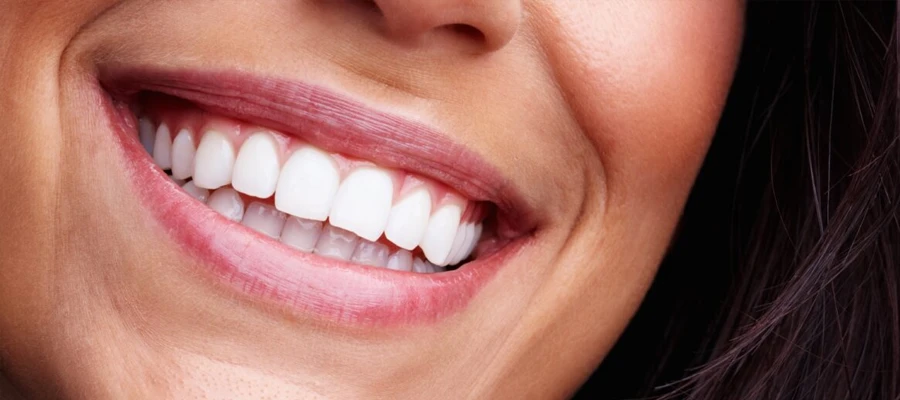
What are Dental Veneers?
A dental veneer is a restoration that surrounds the visible portion of a damaged, weakened, or aesthetically reshaped tooth. When prepared with the correct indications, a dental veneer aims to create a protective and functional outer structure on top of the natural tooth tissue.
Veneers can be made from various materials such as ceramics, zirconia, or metal-ceramic. The material to be used is chosen according to the position of the tooth, the remaining healthy tissue, aesthetic expectations, and chewing forces.
Full crowns and porcelain veneers are not the same restoration. Veneers mostly cover the front surface of the tooth, while full crowns surround a much larger portion of the tooth.
To place a crown, a certain amount of the natural tooth is usually prepared. Since this procedure causes irreversible tissue loss, unnecessary crowns should be avoided on healthy teeth.
Why are dental veneers used?
Dental veneers can be applied to preserve the remaining structure of a tooth, restore its function, or correct significant aesthetic problems. Especially in teeth with severe tissue loss, dental veneers may be preferred to support the weakened structure.
Large fillings, fractures, and advanced wear can reduce the strength of a tooth. Some teeth that have undergone root canal treatment may also require crowns, depending on the amount of remaining tissue.
It can be considered as a restorative option for significant color and shape problems. However, extensively reducing the size of healthy teeth solely to achieve whiter teeth is not always appropriate.
The treatment decision should be made based on the tooth’s current condition. If a more conservative treatment like bonding, filling, inlay, onlay, or laminate is sufficient, a full crown may not be necessary.
In what situations are dental veneers preferred?
In cases where a significant amount of tooth tissue has been lost and a direct filling would not provide sufficient durability, veneers may be considered. After evaluating the remaining tooth tissue, dental veneers can be an option for restoring large fractures or advanced wear.
Crowns may also be necessary for teeth weakened by large, old fillings. After root canal treatment, it’s important to assess the risk of fracture, especially in back teeth.
Some serious color and shape abnormalities can be corrected with restoration. However, for mild discoloration or minor shape differences, more conservative methods may suffice.
Veneer selection should not be based solely on aesthetic expectations. Gum health, bite relationship, remaining healthy tissue, and long-term care requirements should be evaluated together.
Who are suitable candidates for dental veneers?
Individuals with significant tissue loss, fractures, or obvious structural problems requiring restorative correction in their teeth may be evaluated for veneers. Dental veneers can be applied to adults of various age groups when sufficient supporting tissue and appropriate oral health are present.
If there is active decay and gum disease, these problems must be treated first. The health of the tooth root and the surrounding bone also affects the long-term use of the restoration.
Material selection and bite planning are particularly important for individuals with teeth clenching or grinding habits. High forces can increase the risk of fracture or wear in veneers.
Not every aesthetic goal requires a full crown. In cases where healthy tooth tissue can be preserved, it is important to consider less invasive methods.
How is a Pre-Veneer Dental Examination Performed?
During the initial examination, the remaining healthy tissue of the tooth, existing fillings, cavities, and fractures are evaluated. Before applying a dental veneer, the health of the gums and the forces the tooth is subjected to during chewing are also examined.
If there is pain or sensitivity in the tooth, the condition of the nerve tissue should be evaluated. In teeth that have undergone root canal treatment, the condition of the existing treatment and the tissues surrounding the root can be checked.
The gum line and the area where the edges of the veneer will be placed are important in planning. Ensuring the restoration is cleanable supports long-term oral health.
When planning aesthetic treatment for the frontal area, color, shape, adjacent teeth, and smile line are all considered together. The treatment method should only be determined after these assessments.
Are X-rays required before dental veneer placement?
The same imaging protocol is not required for every veneer procedure. However, appropriate radiographic images can be used before dental veneering when additional information about the tooth root or surrounding tissues is needed.
Radiography can be particularly useful in teeth with deep decay, large old fillings, or root canals. The tissues and bone support at the root tip can be evaluated through the images.
If there is pain or suspected infection, the underlying cause must be determined before the veneer is applied. The veneer does not treat the existing infection.
X-rays are not a substitute for a clinical examination. The need for imaging should be determined by considering the tooth’s history, symptoms, and current restorative status.
What are the types of dental veneers?
Dental veneers can be categorized into different options depending on the material used and the manufacturing method. When selecting the appropriate type of dental veneer, aesthetic expectations, tooth position, substructure color, and the chewing forces the restoration will encounter are all considered.
Zirconia coatings can be produced in varieties with different durability and light transmittance properties. Full ceramic systems, on the other hand, can be considered especially in selected areas where high aesthetic expectations are required.
Metal-ceramic coatings consist of an aesthetically pleasing porcelain layer on a durable substrate. Each material has different optical and mechanical properties.
No single type of veneer can be said to be the most natural or durable option for all teeth. Material selection should be based on the structural and aesthetic needs of the tooth.
How are teeth prepared for veneers?
To ensure the veneer has sufficient surface area and a proper placement on the tooth, the natural tooth tissue is shaped in a controlled manner. When preparing a full-coverage dental veneer, tissue may be removed from different surfaces of the tooth to the extent required by the chosen material.
Preparation is usually performed under local anesthesia. The aim is to create sufficient space for restoration without removing excessive tissue.
The relationship between the veneer edges and the teeth and gums is also planned during preparation. Improper edges can facilitate plaque accumulation and gum problems.
Once the preparation is complete, an impression or digital scan is performed. If necessary, a temporary crown may be applied to protect the tooth until the permanent restoration is ready.
How much are teeth cut for dental veneers?
The amount of tooth tissue that needs to be removed varies depending on the material used, the existing shape of the tooth, and the design of the restoration. Therefore, there is no fixed amount of tissue removal that can be applied to all teeth for dental veneers.
Full crowns require preparation on multiple surfaces of the tooth. A controlled area must be created to allow the ceramic or zirconia material to reach the required thickness.
The fact that a tooth already has large fillings or fractures can affect the amount of natural tissue that can be prepared. In a healthy tooth, avoiding unnecessary tissue loss is especially important.
Veneer preparation is an irreversible process. Therefore, full veneers are not mandatory in teeth where more conservative restorations are sufficient.
How to Take Tooth Measurements?
Accurate recording of the prepared tooth and surrounding tissues is crucial for ensuring a properly fitted veneer. In the traditional method, a three-dimensional record of the teeth is created using impression materials and appropriate impression trays for dental veneers.
The veneer boundaries must be clearly visible. If necessary, the gum tissue can be temporarily set back to allow for more accurate recording of the preparation margin.
It is also important to record the opposing jaw and its occlusal relationship. This allows the restoration to be designed not only for the prepared tooth but also according to its contacts with the opposing teeth.
The measurement can be used to create a model in the laboratory. Nowadays, the same information can also be obtained with digital intraoral scanners in appropriate cases.
How are dental veneers prepared using digital measurements?
Using an intraoral scanner, a three-dimensional digital record of the teeth and surrounding tissues can be created. Based on this data, dental veneers can be planned using computer-aided design systems and then transferred to the production process.
During the scan, the prepared tooth, adjacent teeth, and opposing jaw are recorded. The bite relationship can also be digitally transferred to the system.
The boundaries, shape, and contact points of the coating are designed on the resulting model. The restoration is prepared using an appropriate production method, and aesthetic characterization processes are applied when necessary.
Digital measurements can reduce the need for traditional measuring materials in many cases. However, the use of scanning technology alone does not guarantee perfect accuracy or a longer service life.
What are temporary dental crowns?
A temporary restoration is used to protect a naturally formed tooth until a permanent restoration can be prepared. During the crowning phase of the treatment process, this temporary structure can help reduce sensitivity and allow the tooth to maintain its function to a certain extent.
Temporary veneers are also important from an aesthetic point of view. Especially in front teeth, they can prevent a person from being left with edentulous or significantly reduced teeth while permanent restorations are being prepared.
They can also help maintain contact with adjacent teeth and preserve gum form. However, temporary materials are not as durable as permanent restorations.
Hard or sticky foods can cause the temporary veneer to crack or come loose. In such a case, the restoration needs to be evaluated.
How long do temporary coatings last?
The duration of use varies depending on the time it takes to prepare the permanent restoration and the scope of the treatment. In most cases, temporary dental crowns are used to provide short-term protection until the permanent restoration is ready.
Laboratory processes, gum healing, or additional treatments can prolong the waiting period. In some extensive cases, temporary restorations may be used for a longer period for aesthetic and bite assessment purposes.
Temporary coatings should not be considered a long-term, permanent solution. Their materials may be more susceptible to wear, cracking, and discoloration than permanent coatings.
If a temporary restoration loosens or falls off, waiting a long time is not advisable. An evaluation may be necessary to preserve the prepared tooth and maintain its position.
How are permanent dental veneers applied?
The prepared restoration is first tested on the tooth to check marginal fit, color, and contact with adjacent teeth. If found suitable, the dental veneer is fixed to the tooth using an adhesive system appropriate to its material and restoration design.
While some veneers may use traditional dental cements, adhesive bonding protocols may be preferred for certain ceramic restorations. The method to be used is determined according to the properties of the material.
After the veneer is placed, excess adhesive is removed. The perigingival area, interdental spaces, and occlusion contacts are checked.
Strong adhesion of the veneer alone is not sufficient for long-term success. Marginal adaptation, oral hygiene, remaining tooth tissue, and chewing forces affect the lifespan of the restoration.
How many sessions does it take to complete a dental veneer?
The number of sessions may vary depending on the manufacturing method used and the condition of the tooth before treatment. In traditional laboratory-processed veneer treatments, preparation, impression taking, and application of the permanent restoration can be performed in different appointments.
During the first session, the tooth can be prepared, an impression or digital scan can be taken, and a temporary restoration can be applied. At the next appointment, a permanent veneer will be tried on, and necessary checks will be completed.
Digital manufacturing capabilities can shorten the process in some suitable cases. However, rapid manufacturing does not mean that every tooth can be completed in a single session.
The number of sessions may increase if root canal treatment, periodontal treatment, or other preparatory procedures are required. The treatment plan should be determined according to individual needs.
How long does dental veneer treatment take?
The total time varies depending on the number of teeth treated, the type of restoration, and the manufacturing method. The process of preparing numerous restorations in a full smile area may not be completed within the same timeframe as the veneer process covering just a few teeth.
Restorations prepared in the laboratory require a production period after impression taking or scanning. Teeth prepared during this period can be protected with temporary crowns.
The total duration may be longer if additional procedures such as gum treatment or root canal treatment are required. In some cases, it may be necessary to wait for the gums to reach their final position before restoration.
The exact duration can only be estimated after the scope of treatment has been determined. The fit of the restoration, its function, and the preservation of healthy tooth tissue must be considered before speed.
Dental Veneer Prices 2026
Costs vary depending on the number of teeth to be treated, the materials used, and the method of preparing the restorations. Therefore, there is no single standard price applicable to everyone for dental veneers in 2026.
Frequently Asked Questions
Can getting dental veneers damage teeth?
Preparing a certain amount of natural tooth tissue is often necessary for a full crown, and this process is irreversible. Therefore, dental crowns should only be planned when there is a suitable indication and when healthy tissue is preserved as much as possible.
Unnecessary or excessive tooth preparation can lead to unwanted tissue loss. If a more conservative restoration is sufficient, it is important to first consider these options.
Is it necessary to prepare teeth for dental veneers?
Full crown restorations often require tooth preparation to create sufficient space for the restoration. The amount of tissue to be removed for the crown will vary depending on the material used and the existing tooth structure.
In more limited restorations like veneers, less preparation may be required, and minimal preparation may be necessary in selected cases. However, veneers and full crowns are not the same treatment.
How many days does it take to complete a dental veneer restoration?
Treatment duration varies depending on the number of veneers, the manufacturing method, and any additional treatment requirements. In dental veneer applications involving a laboratory process, preparation and placement of the permanent restoration are generally performed in different stages.
Digital processing can shorten the process in some cases. However, it may take longer if root canal or gum treatment is required. Therefore, there is no fixed number of days that applies to everyone.
Does dental veneer treatment hurt?
During dental preparation, local anesthesia is used to control pain. When the area is sufficiently numb, pressure or vibration may be felt during dental veneer preparation, but significant pain is not expected.
Temporary sensitivity may occur in the prepared tooth after the numbness wears off. Severe or progressively worsening pain, however, may differ from normal sensitivity and should be evaluated.
How many days does the pain last after dental veneers are applied?
Mild sensitivity to hot and cold or chewing may temporarily occur in some individuals after treatment. Especially after dental veneers are placed on a vital tooth, the duration of these symptoms can vary depending on the initial condition of the tooth and the preparation performed.
The sensitivity is expected to gradually decrease. If there is spontaneous pain, pain that wakes you up at night, or pain that gradually worsens, the tooth nerve and bite relationship should be checked.
Can I eat immediately after getting dental veneers?
The appropriate time to eat may vary depending on the bonding system used, whether it’s a temporary or permanent restoration, and whether anesthesia is still in effect. Eating while the mouth is numb, especially after dental veneers, increases the risk of involuntary biting of the lip, cheek, or tongue.
If the restoration has been newly bonded, the specific recommendations given should be followed. Temporary restrictions may also apply regarding very hard or sticky foods, depending on the restoration used.
Do veneers look like natural teeth?
When the appropriate material, color, and shape are selected, an aesthetically pleasing appearance close to natural teeth can be achieved. A successful dental veneer design considers not only whiteness but also translucency, surface texture, tooth proportions, and harmony with adjacent teeth.
No single material guarantees the most natural result for everyone. The underlying tooth color, veneer thickness, tooth position, and the optical properties of the ceramic used all affect the final appearance.