



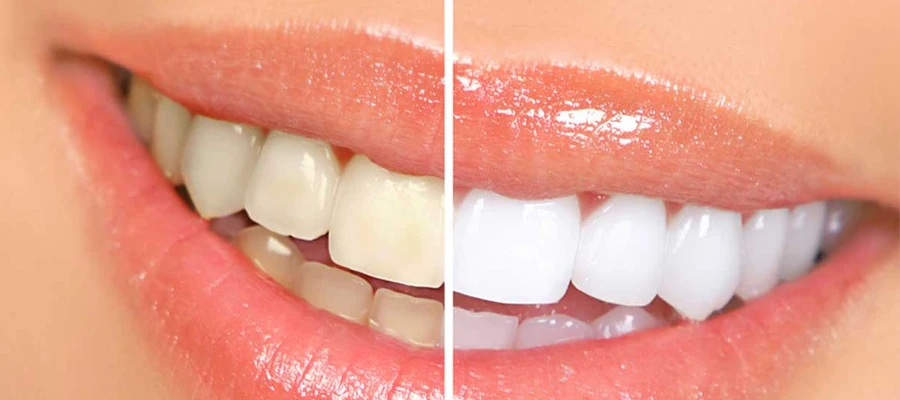
What is Teeth Whitening?
Teeth whitening is an aesthetic procedure aimed at achieving a lighter appearance by reducing natural discoloration of the teeth. Performed in a controlled manner, teeth whitening relies on breaking down specific color pigments embedded in or on the tooth enamel using whitening agents.
In practice, products containing hydrogen peroxide or carbamide peroxide are most commonly used. The concentration and application time may vary depending on the chosen method.
The procedure does not alter the shape or position of the teeth. The primary goal is to lighten the natural tooth color to a certain extent. However, fillings, porcelain veneers, zirconium, or other restorations do not lighten in the same way as natural teeth.
The degree of whitening that can be achieved depends on the initial tooth color and the cause of the discoloration. Therefore, it is not possible to guarantee the same color result for everyone.
How is teeth whitening done?
Before the procedure, the teeth and gums are evaluated to determine the cause of the discoloration. In suitable individuals, teeth whitening can be performed in a clinical setting with higher concentration products or as a home application using custom-made trays.
In clinical practice, the gums are isolated with a protective barrier. Then, the whitening gel is applied to the tooth surfaces in a controlled manner and left for the specified time. Depending on the product, the process may be divided into several application cycles.
In the at-home method, the appropriate amount of gel is placed inside custom-made aligners. The aligners are used for the specified number of days.
The method of application should be chosen according to individual oral health. Excessively high concentrations or uncontrolled use can increase the risk of gum irritation and sensitivity.
Who is teeth whitening suitable for?
Adults whose natural teeth have darkened over time and who have good oral health may be evaluated for the procedure. After examination, teeth whitening may be an option, especially for those who want to reduce the appearance of external or specific internal discolorations.
Coffee, tea, tobacco use, and age-related discoloration may respond to treatment at varying rates. However, not all types of discoloration will lighten to the same extent.
If there is active decay, cracks, significant enamel problems, or uncontrolled gum disease, these conditions should be evaluated first. The treatment plan should also be adjusted accordingly for individuals with intense sensitivity.
If there are numerous fillings, veneers, or crowns in the anterior region, color matching should also be evaluated. Whitening agents do not alter the color of these restorations in the same way as natural teeth.
Why do teeth turn yellow?
Tooth color is affected by the natural properties of enamel and dentin, as well as discoloration that occurs over time. As people age, changes in enamel structure and the increased visibility of dentin can increase the need for teeth whitening.
Substances like coffee, tea, and tobacco can contribute to discoloration of the tooth surface. Plaque and tartar, which form due to poor oral hygiene, can also make teeth appear darker.
Some color changes originate from the internal structure of the tooth. Certain medications used in the past, factors during development, or trauma can cause different discolorations.
Since not all yellowing occurs for the same reason, the approach may vary. While surface stains can be reduced with professional cleaning, true tooth discoloration may require a different approach.
What are the most common causes of tooth discoloration?
Color changes can be categorized into different groups based on external and internal causes. Tooth whitening is frequently requested, particularly due to surface stains caused by tea, coffee, and tobacco use.
External discoloration is related to pigments accumulating on the tooth surface. Plaque and tartar buildup can also affect color appearance. Some surface stains can be significantly reduced with professional cleaning.
Internal color changes originate from the natural color of the tooth tissue. Color changes due to aging, certain developmental factors, trauma, or specific medications can be considered in this group.
Even discoloration in a single root canal may require a different approach. Determining the cause of the discoloration helps in choosing the appropriate whitening method.
Why is a Pre-Teeth Whitening Examination Important?
An oral examination is crucial to determine the source of discoloration and assess whether the whitening procedure can be safely performed. Prior to a planned teeth whitening treatment, cavities, gum disease, cracks, and existing restorations should be checked.
Open cavities or improperly placed restoration edges can cause the whitening gel to reach sensitive areas. Gum problems may also require treatment before application.
Fillings, crowns, and veneers located in the front of the teeth are also evaluated. These materials do not change color along with natural teeth as a result of whitening.
The examination also helps to establish a realistic color target. Since not all discolorations lighten to the same extent, it is important to know the initial color and the cause of the color change.
Is tartar removal necessary before teeth whitening?
Professional cleaning may be necessary before whitening for individuals with tartar or significant surface stains. When tooth surfaces are clean, the areas to be treated with the tooth whitening agent can be more accurately assessed, and the true initial color can be seen more clearly.
Tartar removal and whitening are not the same process. Professional cleaning removes surface deposits and some external stains, while whitening aims to lighten the natural color of the tooth.
Not everyone has a high concentration of tartar. Therefore, it cannot be said that everyone must undergo the same cleaning process.
If gum inflammation or significant buildup is present, improving oral hygiene may be necessary first. The subsequent whitening plan can then be tailored to the natural color of the cleaned teeth.
What are the methods for teeth whitening?
Professional treatments can be planned primarily as clinical-type methods and at-home methods using custom-made trays. In some cases, these two approaches can also be used together in a controlled manner for teeth whitening.
In clinical practice, higher concentrations of whitening agents are applied to the tooth surfaces for specific periods of time while protecting the gums. Results are noticeable in a shorter time.
In the at-home method, a custom-made tray and gel of the appropriate concentration are used. The process may be spread over several days or a longer schedule.
In select cases where a single tooth has darkened after root canal treatment, different internal whitening techniques may be considered. However, the concentrations and effectiveness of over-the-counter products may differ from those used in professional applications.
How many shades of lightening can teeth whitening provide?
The resulting color change will vary depending on the initial tooth color and the nature of the discoloration. Therefore, a guaranteed shade of whitening that will work for everyone cannot be guaranteed with teeth whitening.
Natural teeth with a yellowish tint may respond more noticeably to certain treatments, while gray or deep intrinsic discoloration may show more limited change. The method used and the duration of the treatment also affect the outcome.
Color evaluation can be done using standard color scales or digital measurement methods. However, the concept of “hue” can have different meanings depending on the color system used.
The goal is not to achieve the whitest possible color, but rather to provide a lightness that is appropriate to the person’s natural tooth structure. Excessive application does not mean better or more permanent results.
Does the result of teeth whitening vary from person to person?
The initial color, enamel and dentin characteristics, and the cause of discoloration directly affect the final result. Therefore, two individuals undergoing the same teeth whitening procedure may experience different degrees of color lightening.
Age-related yellowing and drug-induced intrinsic discoloration may not respond in the same way. Differences in the natural structure of the teeth also affect the appearance of the final color.
Application time and the concentration of the bleaching agent used are other determining factors. If sensitivity develops, the program may need to be changed.
The desired color may also be beyond the biological limits a person’s natural teeth can reach. Therefore, it is important to establish realistic expectations before the procedure.
Is Teeth Whitening Possible in a Single Session?
In some clinical settings, a noticeable color change can be achieved after a single session. However, it cannot be guaranteed that everyone will achieve the desired level of teeth whitening results in a single session.
The degree and nature of the initial discoloration will affect the number of applications required. Some individuals may require additional clinical sessions or controlled at-home treatment.
The color seen immediately after the first application may also be affected by the temporary loss of moisture in the teeth. The color may change slightly as the teeth regain moisture.
Therefore, it is not accurate to make a final assessment only in the first few minutes after the procedure. The need for additional procedures should be determined according to the teeth’s response.
How long does a teeth whitening procedure take?
The application time varies depending on the chosen method and the protocol of the product used. Teeth whitening performed in a clinical setting generally requires a specific appointment time consisting of preparation, gum isolation, and gel application.
Instead of being left on for a long time in one application, the whitening gel can be applied in several cycles depending on the system used. In at-home methods, the daily application time is different, and the treatment may be spread over several days.
Longer application time doesn’t always provide greater whitening. Unnecessary duration or intensity can increase the risk of sensitivity and gum irritation.
The starting color of the treatment program should be determined based on the targeted change and the individual’s sensitivity level.
How many sessions are needed for teeth whitening?
The number of sessions required varies depending on the initial color of the teeth, the type of discoloration, and the response to the initial treatment. While some individuals may achieve sufficient visual improvement with a single clinical session of teeth whitening, others may require additional treatments.
Deep or resistant discolorations may require a longer treatment program. Plans in which clinical treatment is supported by at-home aligners may also be used.
If sensitivity occurs, the time between applications or the concentration of the product used can be re-evaluated. More sessions do not always mean better results.
The goal of treatment is to achieve a natural color change without unnecessarily stressing the tooth tissue. Therefore, the number of sessions should be determined on an individual basis.
Is Teeth Whitening Painful?
The procedure can be completed without significant pain for most people, but temporary tooth sensitivity may occur. Short-term sensitivity to cold, heat, or air may be experienced, especially during or after teeth whitening.
The degree of sensitivity varies from person to person. Factors such as having pre-existing sensitive teeth, the concentration of the product used, and the duration of application can all affect this.
Contact between whitening gel and gums can also cause temporary irritation. Therefore, protecting soft tissues is important in clinical applications.
Severe or prolonged pain may differ from normal sensitivity. In such a case, underlying dental problems should be evaluated.
Why does sensitivity occur after teeth whitening?
Whitening agents travel through microscopic pathways in the tooth tissue, acting on the molecules that cause discoloration. During this process, temporary sensitivity may occur in tissues near the tooth nerve after tooth whitening.
Cold drinks, air, or temperature changes can make short-term stinging more pronounced. Sensitivity may also be related to the concentration of the product used and the duration of application.
Exposed root surfaces due to receding gums or pre-existing sensitivity complaints can cause the symptoms to be felt more intensely.
This condition is usually temporary. However, if you experience persistent, throbbing pain, or pain concentrated in a single tooth, it shouldn’t be assumed to be solely due to the whitening treatment.
How long does sensitivity last after teeth whitening?
Temporary sensitivity is usually more noticeable in the early stages after the procedure and decreases over time. The duration and severity of discomfort after teeth whitening can vary depending on individual sensitivity levels.
While some people experience mild sensitivity for only a few hours, others may experience symptoms for several days. The intensity of the application and the initial condition of the teeth can affect this duration.
Sensitivity-reducing toothpastes or changes to the application schedule may be helpful in selected cases. If significant sensitivity develops with at-home use, the frequency of use may need to be re-evaluated.
If the pain is prolonged or worsens, the tooth should be checked to see if there are any other problems.
Teeth Whitening Prices 2026
Costs can vary depending on the method used, the number of treatments, and the scope of treatment required. Therefore, it is not possible to give a single standard price for teeth whitening in 2026 that will apply to everyone.
Frequently Asked Questions
How many shades does teeth whitening lighten?
The change achieved depends on the initial tooth color and the cause of the discoloration. While tooth whitening treatments can provide a noticeable lightening in some individuals, they may yield more limited results in cases of deep or grayish discoloration.
How long does teeth whitening take?
The duration of clinical treatment can vary depending on the protocol of the system used and the required treatment cycles. At-home teeth whitening, on the other hand, can be applied as a program involving the use of custom-made trays for specified periods and spread over several days.
Does teeth whitening yield results in a single session?
Some individuals may experience a noticeable discoloration after the first clinical treatment. However, achieving the desired level of teeth whitening in a single session depends on the initial color and the type of discoloration.
Is teeth whitening permanent?
The resulting color change can be maintained for a long time, but teeth do not remain exactly the same color throughout life. Over time, the results of teeth whitening can be affected by coffee, tea, and tobacco use, dietary habits, and natural aging.
Does teeth whitening damage teeth?
When the appropriate products are used at the correct concentration and duration, the process can be performed in a controlled manner. However, using teeth whitening products too frequently or without control can lead to problems such as sensitivity and gum irritation.
Is sensitivity after teeth whitening normal?
Short-term and mild tooth sensitivity is among the common effects that can be seen after the procedure. In particular, cold drinks or contact with air may cause temporary sensitivity in some teeth after teeth whitening.